

The complete guide
Choosing a 10x10 Pop Up Canopy for Outdoor Shade
Give your outdoor gathering a shaded base
A sunny garden or open event space can leave everyone searching for the same small patch of shade. Tables get moved, chairs follow the sun, and a simple afternoon outside becomes harder to organise. An outdoor shade canopy gives you a defined place to gather without building a permanent structure.
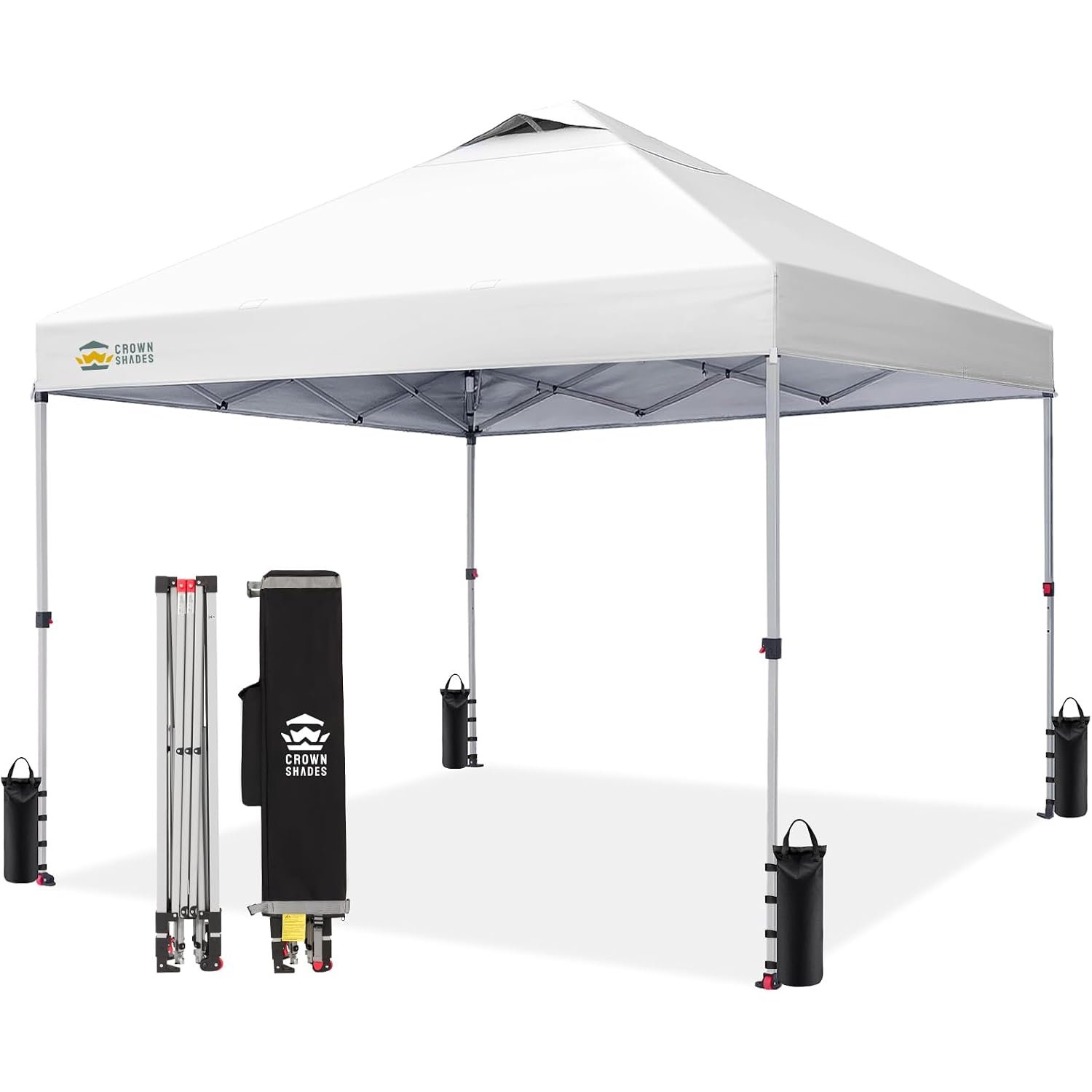
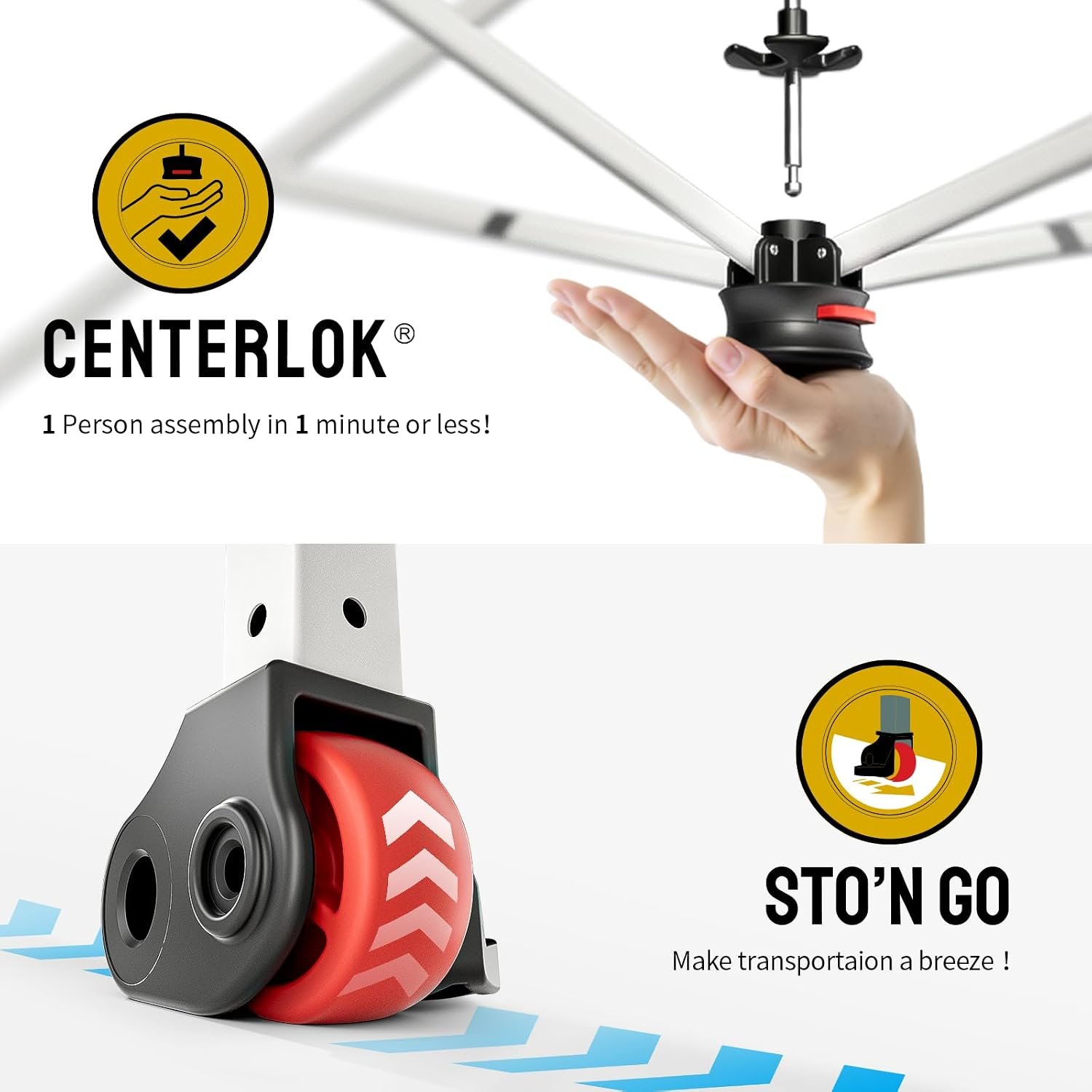
The RM100H is a 10x10 pop up canopy with a one-push centre lock, a vented roof and a storage bag. It is designed for temporary use at outdoor events, on camping trips and wherever suitable shade is needed.
The useful question is not just whether it covers enough ground. Think about how you will carry it, anchor it and arrange the space beneath it. Those details make the difference between a shelter that fits your plans and one that stays in storage.
Understand what the 10x10 size gives you
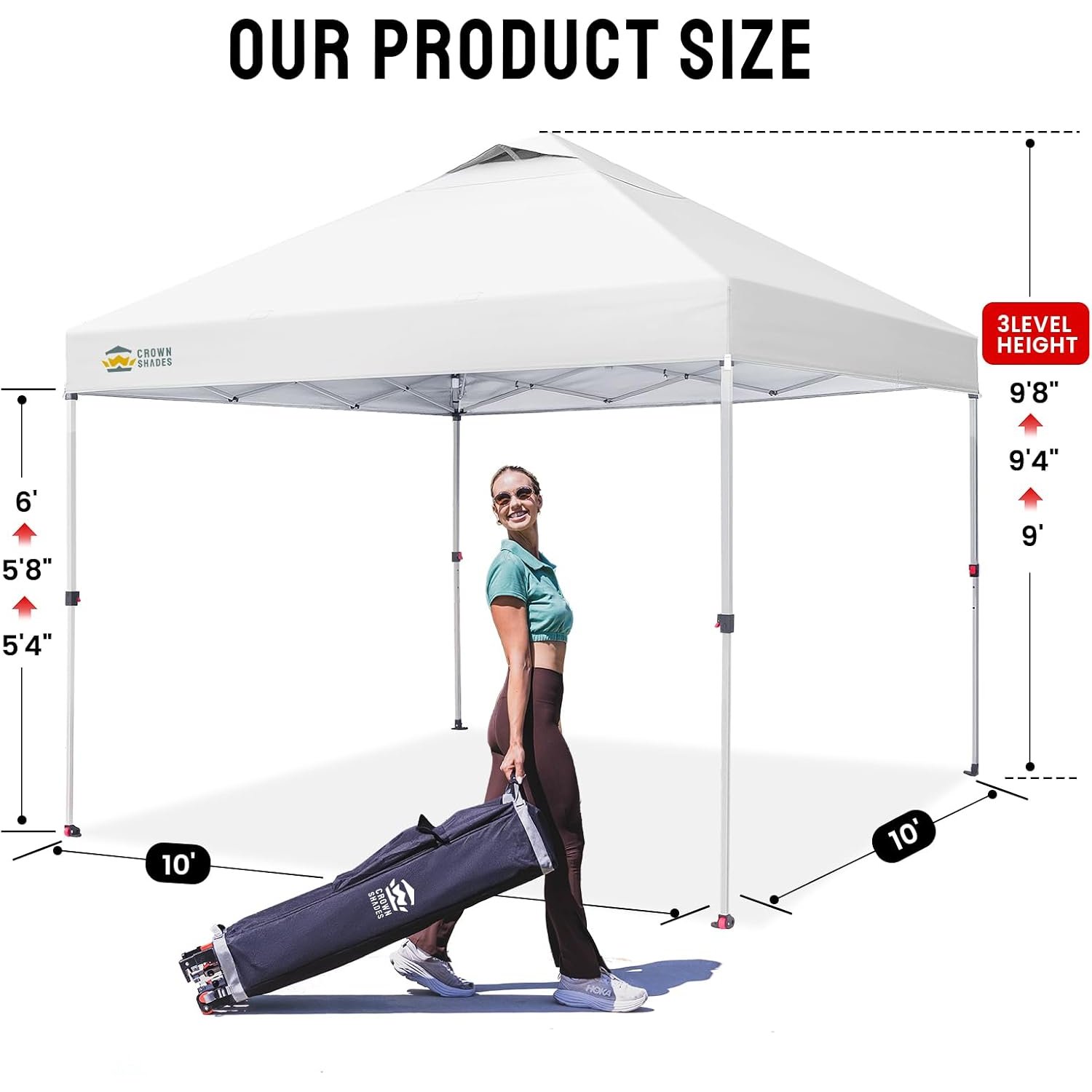
This canopy has a listed footprint of 10 x 10 feet, providing 100 square feet of covered space. The recorded dimensions are 304.8 x 304.8 x 274.32 cm. Measure your intended site before buying, including room around the shelter for ropes and safe access.
The maker gives an occupancy of up to 10 people. Treat that as a planning reference, not a promise that every group of 10 will fit comfortably. A standing gathering uses space differently from a seated meal.
A table, chairs and bags can fill the footprint quickly. For a party shade canopy, sketch the furniture layout first. Leave room for people to pull out chairs and move around without stepping outside the shelter or catching a foot on an anchor line.
Shade also changes as the sun moves. An open-sided roof does not block low sunlight from every direction, so consider when and where you will use it.
How the pop up frame works
The frame is a pre-assembled alloy steel truss. Rather than joining loose poles, you open the connected structure and use the central locking hub to secure it. The maker describes a two-person setup without tools.
That makes the one push canopy design appealing for occasional outings and repeat events. There are fewer separate frame pieces to sort through, though you still need to follow the full assembly process. Opening the frame is only part of the job.
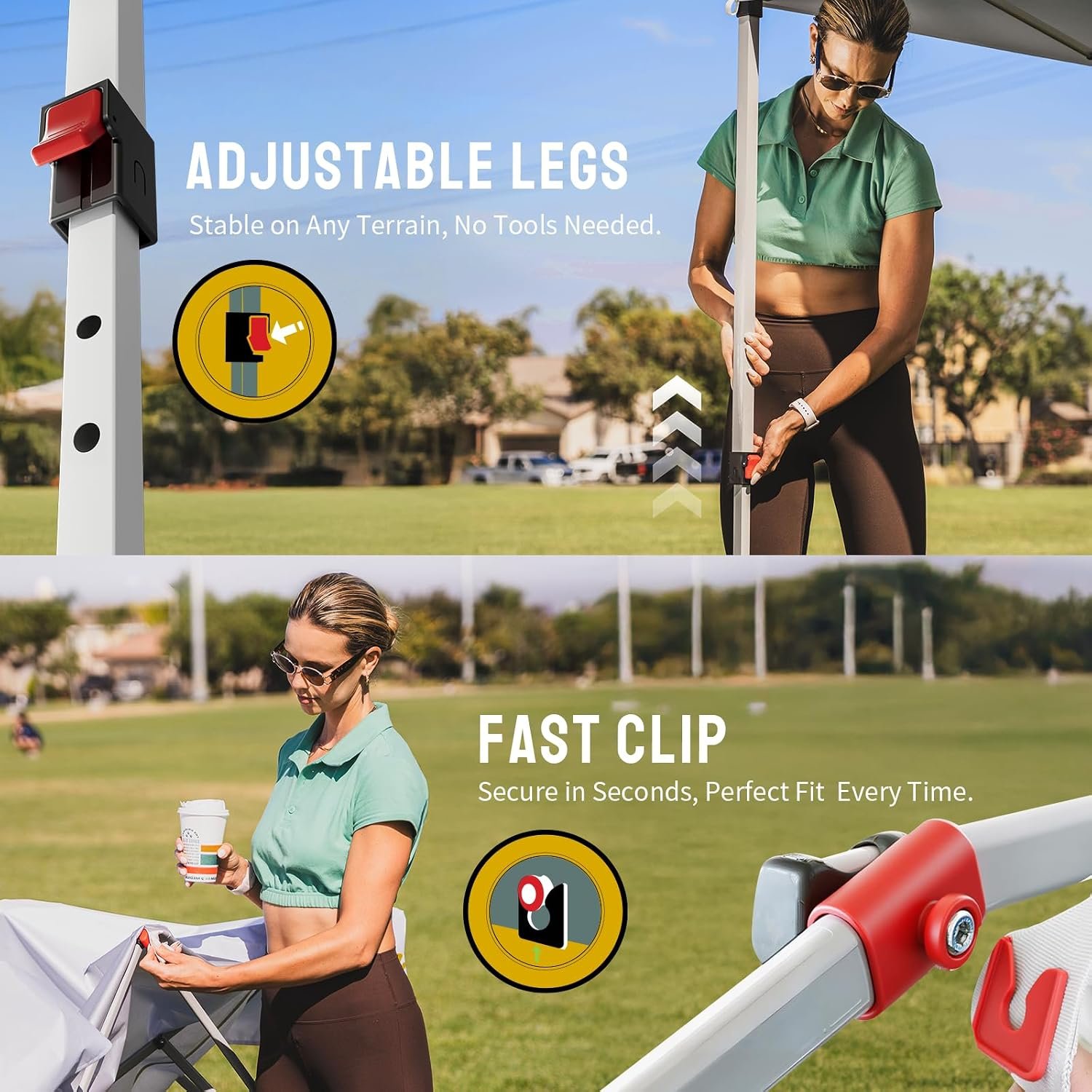
The roof fabric attaches with a clip system, and three height settings are listed. Read the supplied instructions before your first outing so you know how the locking points and adjustments work.
A practice setup at home is a sensible step. It gives you time to check the components and learn the folding sequence without guests waiting or an event opening around you.
Know what the roof can and cannot do
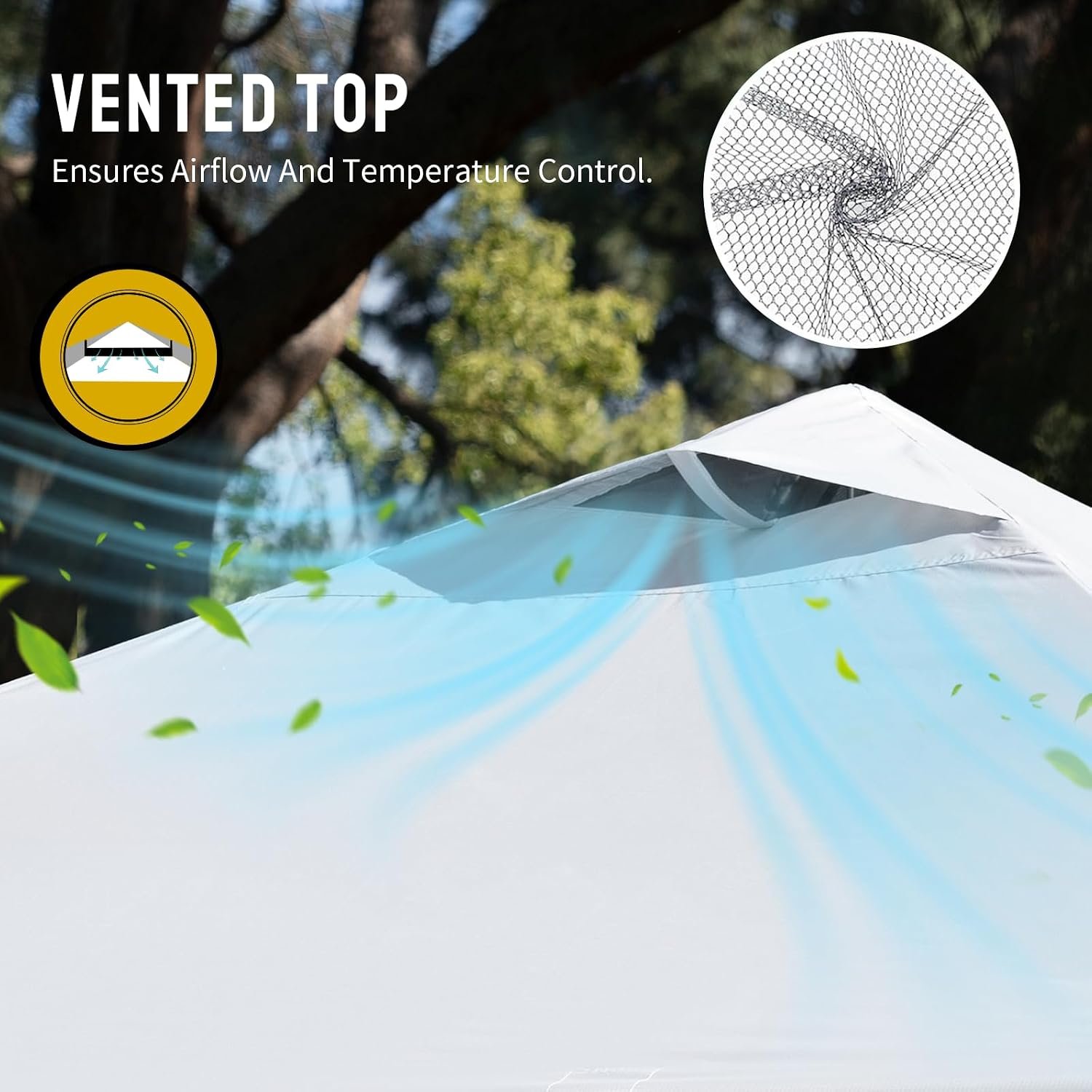
The roof uses silver-coated 150D fabric and includes a vented top. The specifications describe it as water resistant and list 95% ultraviolet light protection. These are useful features for an outdoor event canopy, but they have limits.
Water resistant is not the same as waterproof. Do not plan on the canopy as your only shelter during heavy or prolonged rain. If the forecast looks poor, have an indoor option or change the plan.
The vent supports airflow through the roof. It does not make the shelter windproof, and the maker's description does not provide a wind-speed rating. Anchoring and weather awareness remain essential.
Sun protection still matters under a canopy. Light can reach you from the sides, and the shaded area moves during the day. Keep suitable clothing and sunscreen in your outdoor routine rather than treating the roof as complete protection.
Match the canopy to your usual outings
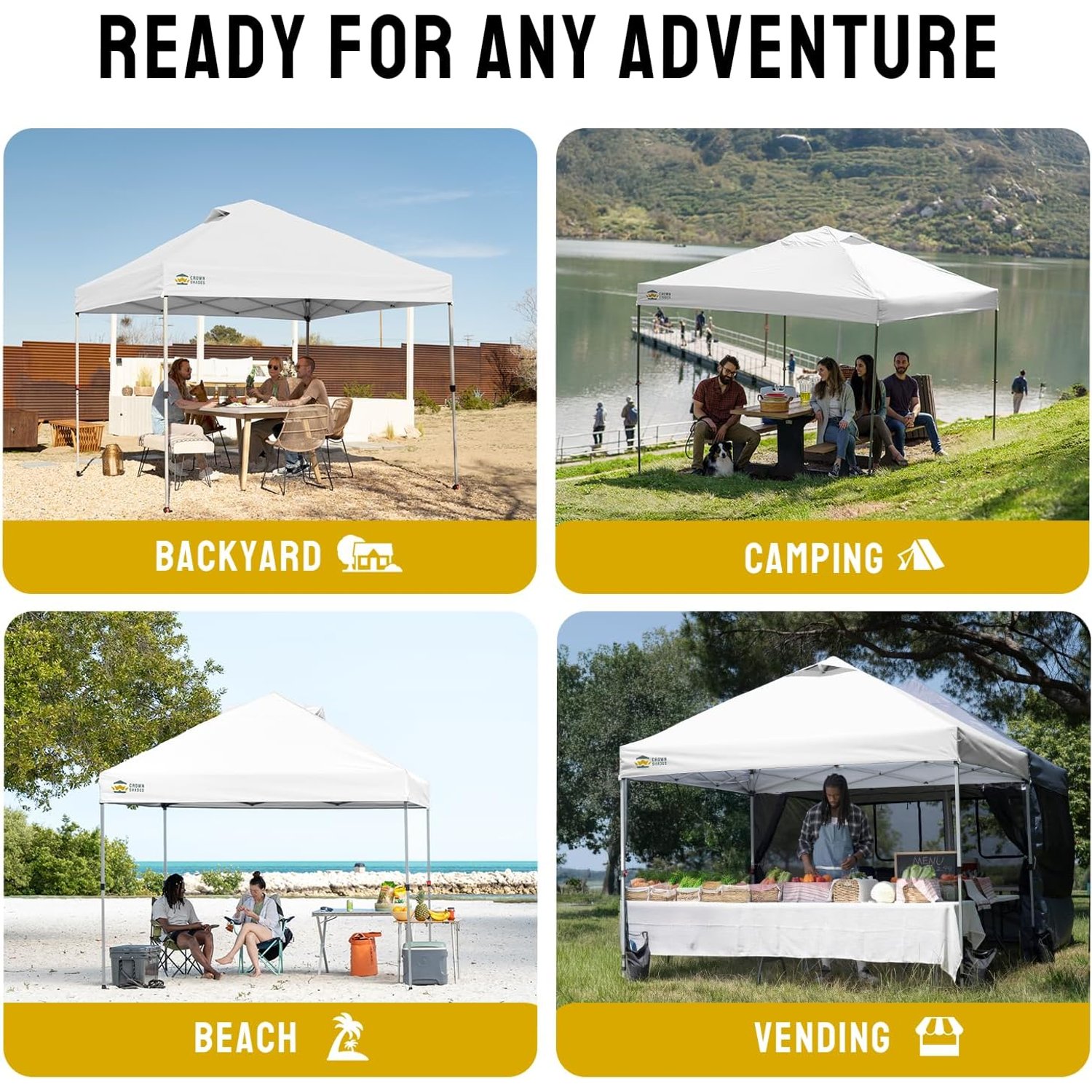
For garden use, a portable outdoor gazebo can create a temporary focus for seating or refreshments. You can set up for a gathering and pack it away afterwards rather than giving over part of the garden to a fixed structure.
As a camping shade shelter, this model can cover a shared daytime area. It is not described as an enclosed tent for sleeping. If privacy, insect screening or protected overnight accommodation is your goal, the maker's description does not establish those features.
A craft fair canopy has different demands. You need room for stock, display furniture and access, and the organiser may set rules for ballast or supporting documents. Check those rules before deciding that a 10x10 footprint is enough.
For tailgating or sports events, consider the distance from the car to the setup spot. A convenient shelter at the venue still needs a realistic transport plan.
Think about the ground before the roof
The maker includes eight stakes and four guy ropes. These are important components, but the correct anchoring method depends on the surface and the manufacturer's instructions. Do not assume every outdoor site can use the same setup.
A lawn, paved patio and sandy beach each present different conditions. Stakes cannot be driven into paving. Loose sand also needs a different approach from firm ground. Confirm what the maker permits before choosing your location.
If you want a patio shade tent, check how it can be secured without using ground stakes. For a beach shade canopy, review both anchoring guidance and local rules. The storage description mentions room for sandbags, but their inclusion is not clearly confirmed.
Place ropes where people can see and avoid them. Keep access paths clear, and do not let the need for a particular view or table position override a safe layout.
Plan for transport and storage
At 16.3 kg, this is a shelter to plan around rather than an item to add casually to a long walk. Think about lifting it, getting it through doorways and loading it into your vehicle. A second person may be useful for handling as well as setup.
The listed packed dimensions are 45 x 8.5 x 8.5 inches. Measure the boot opening, not just the space inside. A bag may fit across the storage area but still be awkward to pass through a narrow opening.
The STO-N-Go system allows storage with the roof fabric attached. That can reduce the number of separate parts you handle between outings, but dry storage still matters.
Choose a place where the packed canopy will not block a walkway or be crushed under other equipment. Keep the stakes and ropes together so they are ready for the next trip.
Decide which details matter most
When comparing a garden shade canopy with other shelters, start with the practical limits. Footprint, weight, packed length and anchoring needs are more useful than a long list of promises.
This model offers a steel frame, a one-push centre lock and three height settings. If you often assemble temporary shade with another person, those details may suit your routine. If you need to carry shelter a long distance alone, give the listed weight close attention.
Appearance may matter for events, too. The specification describes this version as Grid White. Check available product imagery if matching other equipment is important.
Care for it between outings
Start each use with a quick inspection. Look over the fabric, frame joints, ropes and stakes, and follow the manufacturer's advice if anything is damaged or does not operate normally. Do not force a reluctant lock or frame section.
After use, brush away loose dirt. Where the care label permits, clean gently with mild soap and water. Avoid harsh treatment unless the manufacturer specifically allows it.
Let the roof and frame dry fully before packing. If you have to leave a site while the shelter is damp, unpack it to dry as soon as practical. Closed storage is not a drying method.
Keep cooking equipment, heaters and flames away. A flame-resistance description does not make canopy fabric fireproof, and the maker's description does not provide cooking clearance instructions.
The short version
This 10x10 pop up canopy tent offers 100 square feet of overhead coverage, a pre-assembled steel truss and a one-push centre lock. Its vented, silver-coated roof and STO-N-Go bag suit the idea of temporary shade that can be packed between outings.
Choose it by checking the whole routine, from vehicle space to anchoring and dry storage. If the footprint fits, two-person setup is practical and the site allows safe securing, it is worth considering for garden gatherings, camping and outdoor events. Keep a weather backup plan, and let the supplied instructions guide every setup.