

The complete guide
The Practical Guide to Inline Shower Filters
The smell you stop noticing
Run the hot tap in most bathrooms and there is a faint chemical note in the steam. Chlorine is added to mains water on purpose, because it keeps the supply safe on its long trip from the treatment plant to your tap. That is a good thing. It is also a smell that gets stronger in a hot, enclosed shower, because heat and spray push it into the air far more than a cold glass of water ever does.
Then there is the other side of it. Older pipes shed rust. Street works stir up sediment. After a main is repaired nearby, the first shower can come out with a brown tint for a few minutes. None of that is unusual, and none of it means the supply has failed. It just means the water arriving at your head is carrying some passengers you would rather it left behind.
An inline shower filter is the smallest, least invasive way to deal with both. It sits in the line and treats everything that goes through the head. That is it. No tank, no power, no second tap.
How this one works
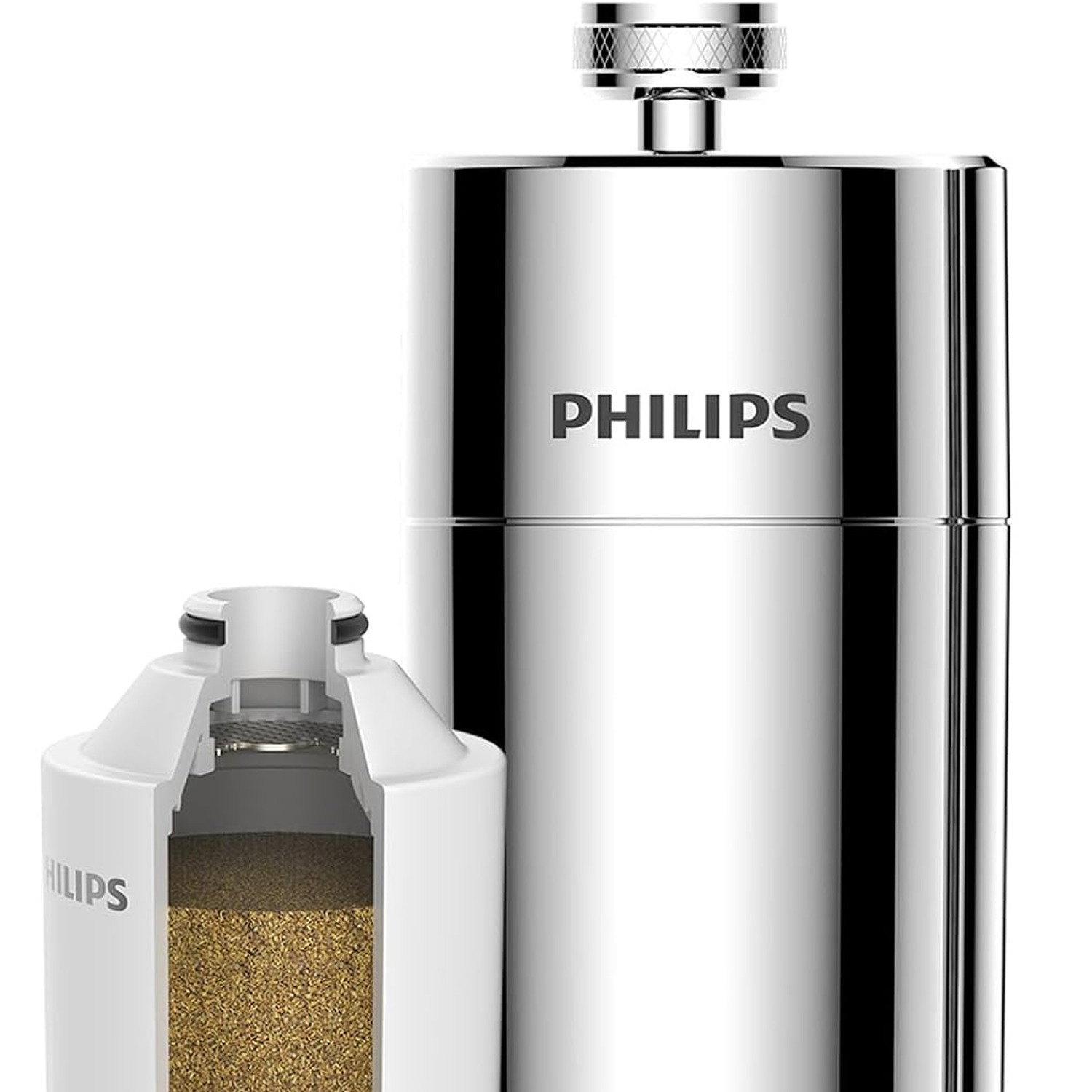
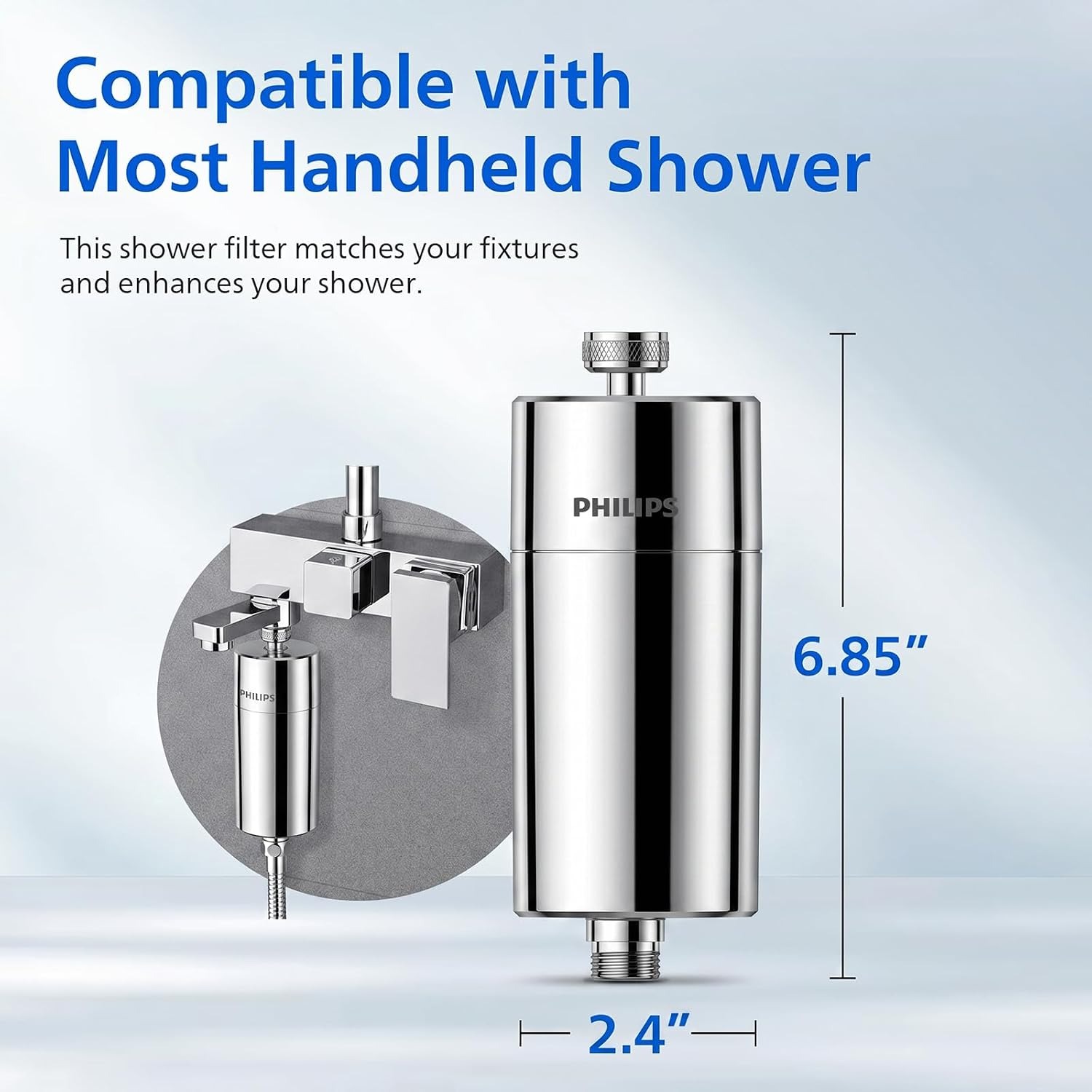
This set is two pieces. There is a chrome housing that stays in place, and a cartridge inside it that you replace from time to time.
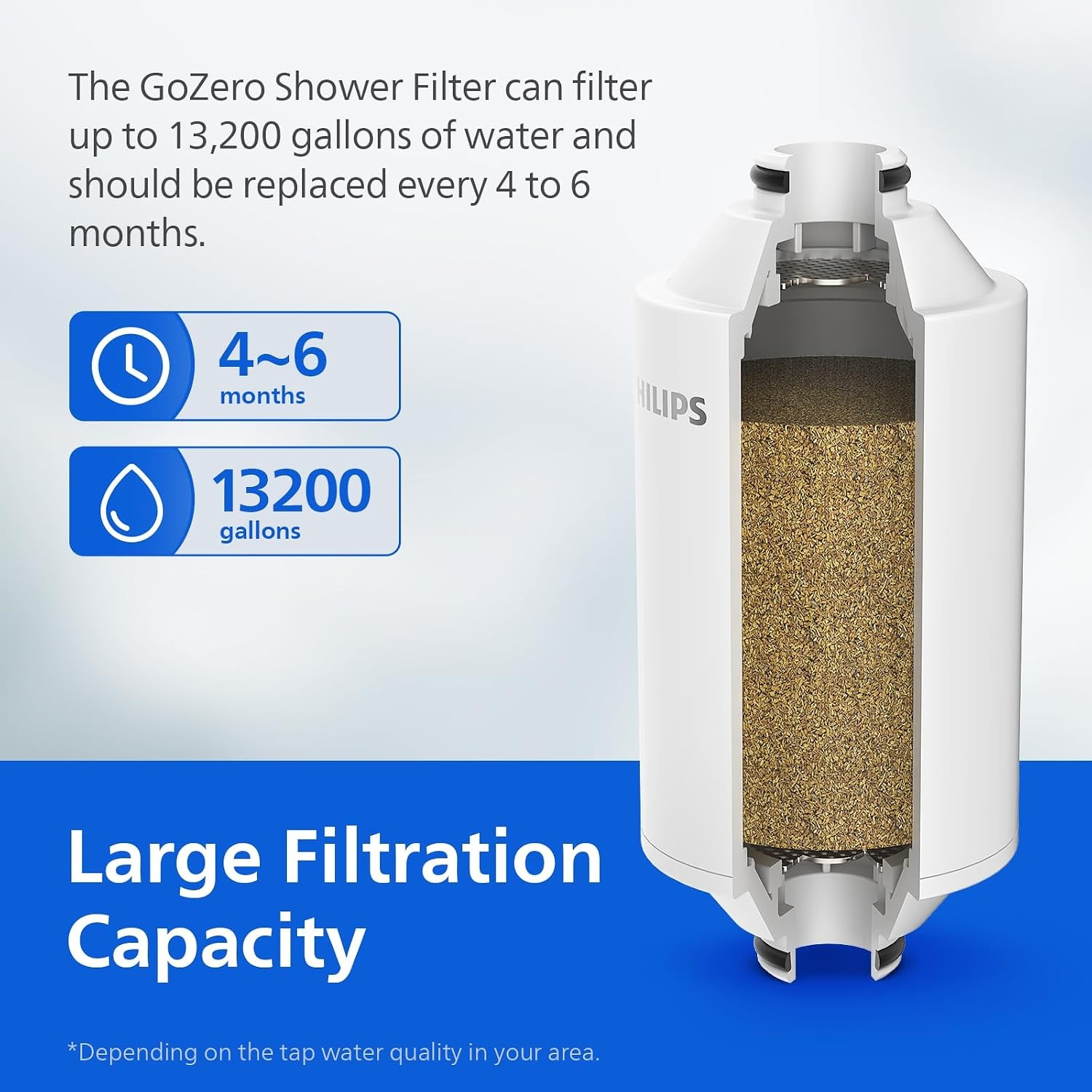
The cartridge is described by the maker as three stage. Water first meets double mesh filtration, which is a physical screen. Mesh catches the things you can see or feel: rust flakes, grit, sediment stirred up from the mains. It is the simplest part of the system and often the most satisfying, because it is the part that stops the gritty residue in the base of the shower.
Behind the mesh sits KDF media, made from copper and zinc. This is the chemical stage, and it is the reason KDF is so common in shower filters specifically. It handles warm flowing water well, which is exactly the condition a shower creates. In this cartridge it is the part designed to reduce residual chlorine.
What it does not do is just as important. The maker is clear that it generally does not reduce total dissolved solids, and it is not a water softener. If you have scale building on your glass screen and you want that solved, a shower filter is not your answer. Be honest with yourself about which problem you are trying to fix before you buy, because the best shower filter for chlorine taste and odour is a completely different product from a scale solution.
Fitting it
This is the part that sells the product to most people. You do not need a plumber, a wrench, or a spare Saturday.
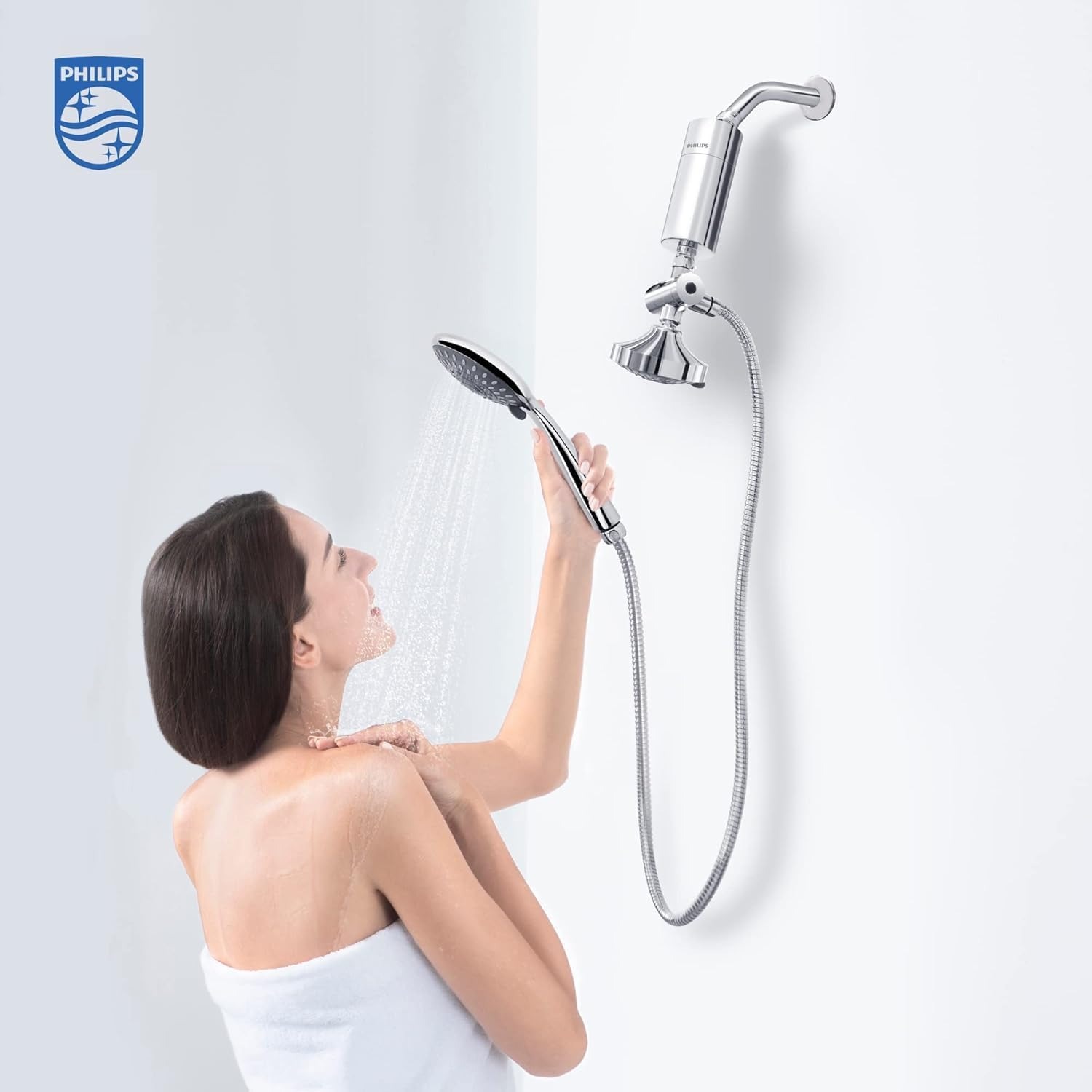
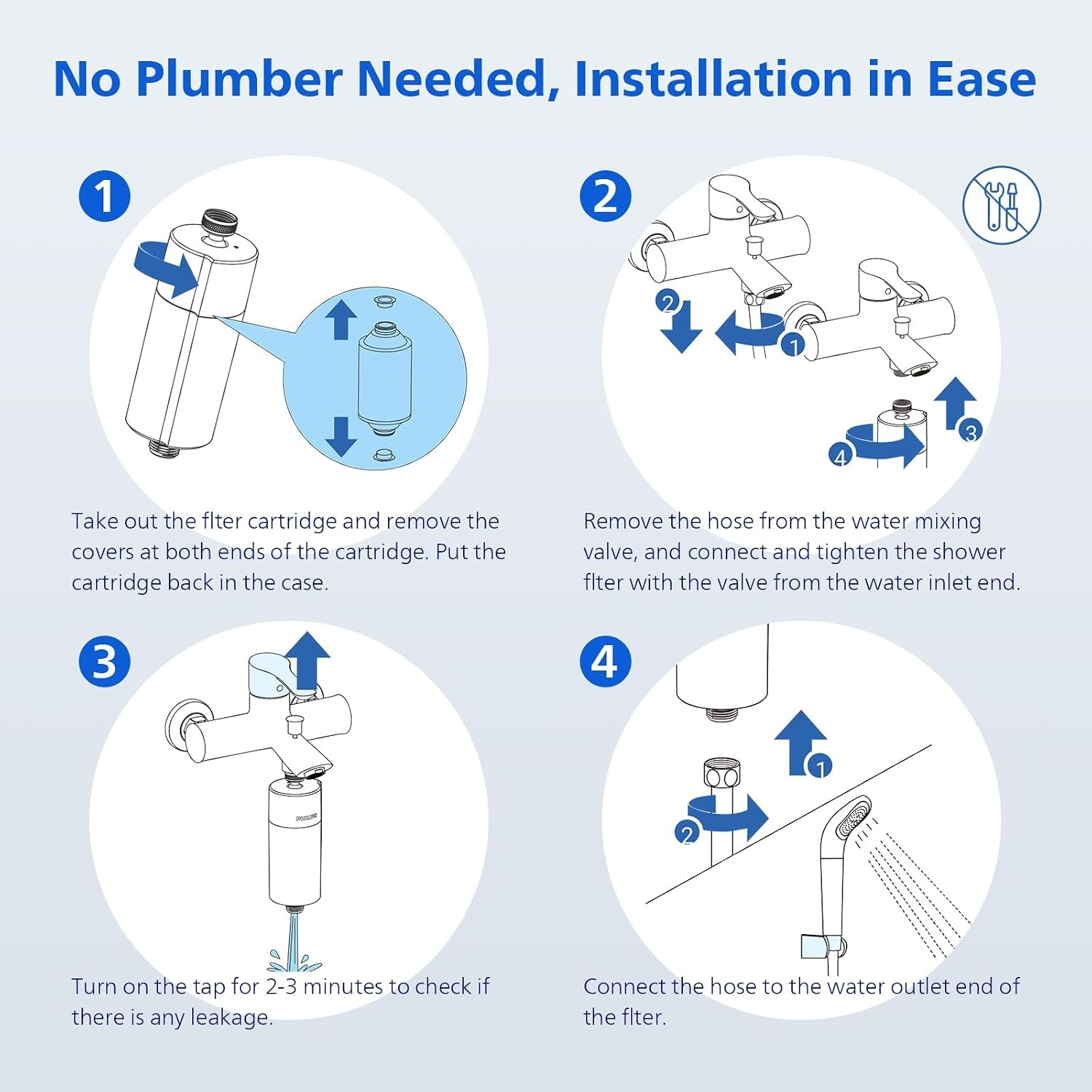
Find the point where your shower head screws onto the hose or the wall arm. Unscrew the head by hand. Thread the filter onto the hose or arm. Thread the head back onto the other end of the filter. Turn the water on and check for drips. Most people are done in about two minutes.
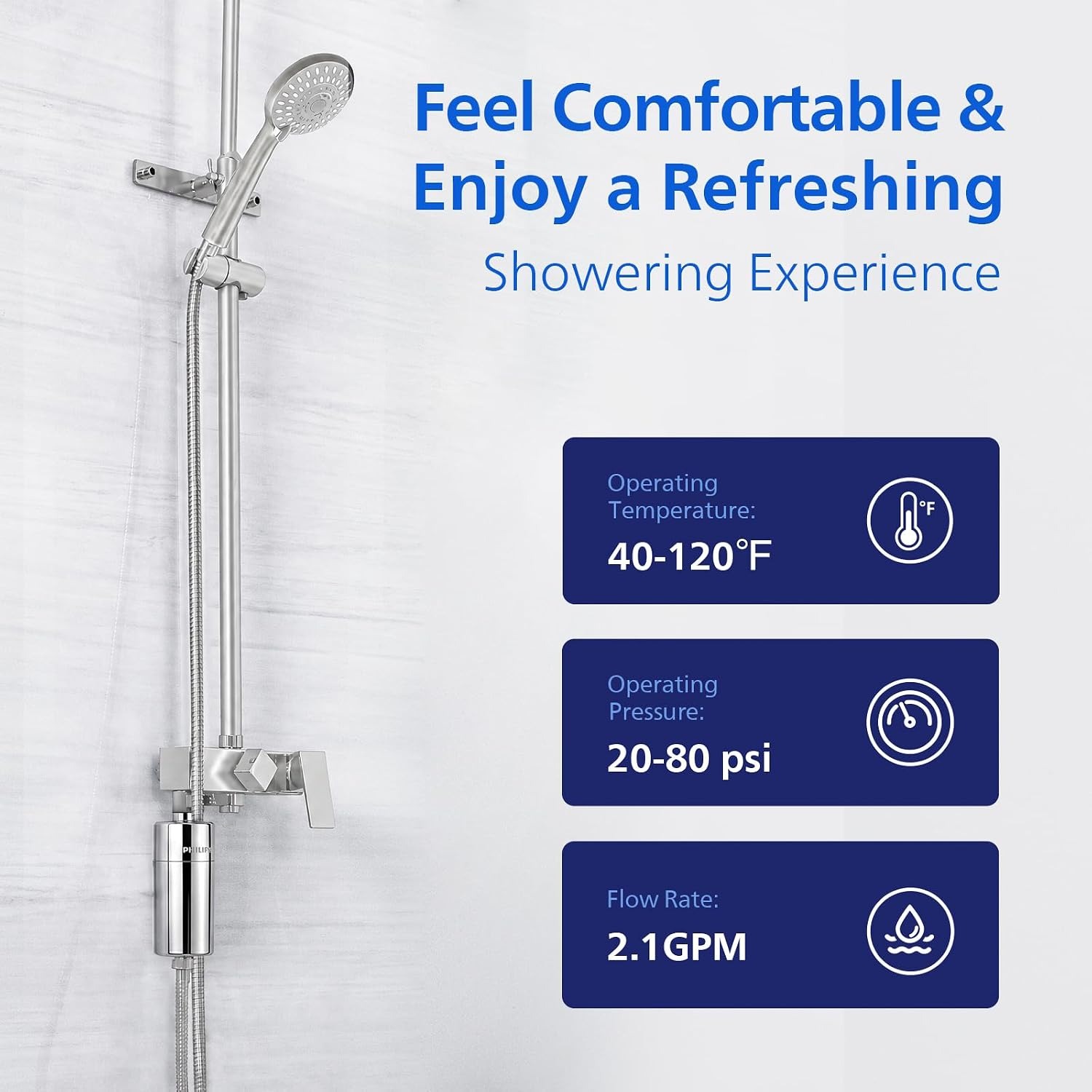
The maker lists compatibility with most handheld and rainfall shower heads, which covers the large majority of setups. The one situation where it will not work is a head plumbed flush into a ceiling or wall with no visible threaded joint. If you cannot see where the head screws on, there is nowhere for an inline filter to go.
For renters this matters a lot. Nothing is drilled, cut or permanently changed. When you move, you unscrew it, put the original head back on, and take the filter with you. That portability is why the best shower filter for renters is almost always an inline unit rather than a filtered head.
Who it actually suits
Households on mains town water who notice a chlorine smell in the bathroom. That is the main group. Apartment dwellers whose building has older internal pipework, where sediment turns up more often than it should. People in houses where the street main gets worked on regularly.
It also suits anyone who wants a tidy result. A filtered shower head replaces your existing head, which means living with whatever spray pattern comes in the box. An inline filter leaves your head alone. If you already like your shower, the best inline shower filter approach keeps it exactly as it is and just treats the water arriving at it.
Who it does not suit: anyone on tank, bore or untreated supply hoping this will make the water fit to use. It is designed for drinkable mains water and nothing in the maker's description supports using it any other way. Also anyone chasing a softener. It is not one.
Choosing between the options
Three things separate shower filters in practice.
The first is where the filtration sits. Inline units like this one keep your existing head. Filtered heads bundle both together, which is neater but locks you into one spray. Inline wins if you are fussy about your shower, and a filtered head wins if your current one is tired anyway.
The second is the media inside. KDF is the standard for shower use because of how it behaves in warm water. Some cartridges add carbon, some add ceramic beads, some add a bit of theatre. This one is double mesh plus KDF, which is a straightforward combination.
The third is cartridge economics. Every filter is a consumable, and the real cost over three years is the cartridge, not the housing. This one is rated by the maker at up to 50,000 litres or 4 to 6 months. Work out roughly what that means for your household before you buy, and check that replacement cartridges are easy to get hold of. The best replacement shower cartridge is the one you can actually find when you need it.
Living with it
Maintenance comes down to two habits.
Habit one is marking the date. When you fit a new cartridge, set a phone reminder for four months out. That turns a vague "I should probably change that" into a two minute job on a specific morning. Water quality varies enough between suburbs that the 4 to 6 month range is a guide, not a promise. Flow is your other indicator. If the spray has quietly weakened, the cartridge is loaded.
Habit two is leaving the chrome alone. A soft damp cloth and a dry-off is enough. Abrasive pads and strong bathroom cleaners will dull the finish faster than the water ever will. The housing is made of anti-scald material, so hot water is not an issue, but harsh chemicals on the outside are a different matter.
Changing the cartridge is the same process as fitting the unit in the first place. Turn the water off, open the housing by hand, swap the cartridge, close it up. If mineral build-up has made the housing stiff after a few months, a rubber jar grip gives you grip without scratching anything.
The short version
This is an inline shower filter set with one chrome housing and one three stage cartridge. The mesh layers are designed to reduce visible impurities like rust and sediment. The KDF copper and zinc media is designed to reduce residual chlorine. It threads on by hand between your hose or arm and your existing shower head in about two minutes, works with hot and cold water, weighs 544 g, and suits most handheld and rainfall heads.
It is for drinkable mains water. It is not a softener, and the maker notes it generally does not reduce TDS. Cartridges are rated for up to 50,000 litres or 4 to 6 months and need replacing on that schedule.
If your shower smells faintly of a swimming pool and you would rather it did not, this is the simplest fix on the list. If you are not sure whether it will fit your setup, send us a photo of the joint behind your shower head and we will tell you before you order.