

The complete guide
Choosing an Under Sink Water Filter, A Practical Buyer's Guide
The problem with the tap you already have
Most people do not think much about their kitchen tap until something changes. The council flushes the mains, the water tastes of chlorine for a week, and suddenly everyone in the house is drinking from a jug in the fridge. Then the jug gets left empty, somebody refills it, somebody else forgets, and you end up buying bottled water you did not want to buy.
An under sink water filter solves that problem by removing the decision entirely. There is no jug to refill and no bench-top gadget taking up room next to the kettle. The filter lives in the cupboard, the tap works exactly as it always did, and the water that comes out has already been through the cartridge.
That is the whole appeal. You do not change your habits. The kitchen looks the same. The only difference happens inside a housing you rarely see.
How an under counter filter works
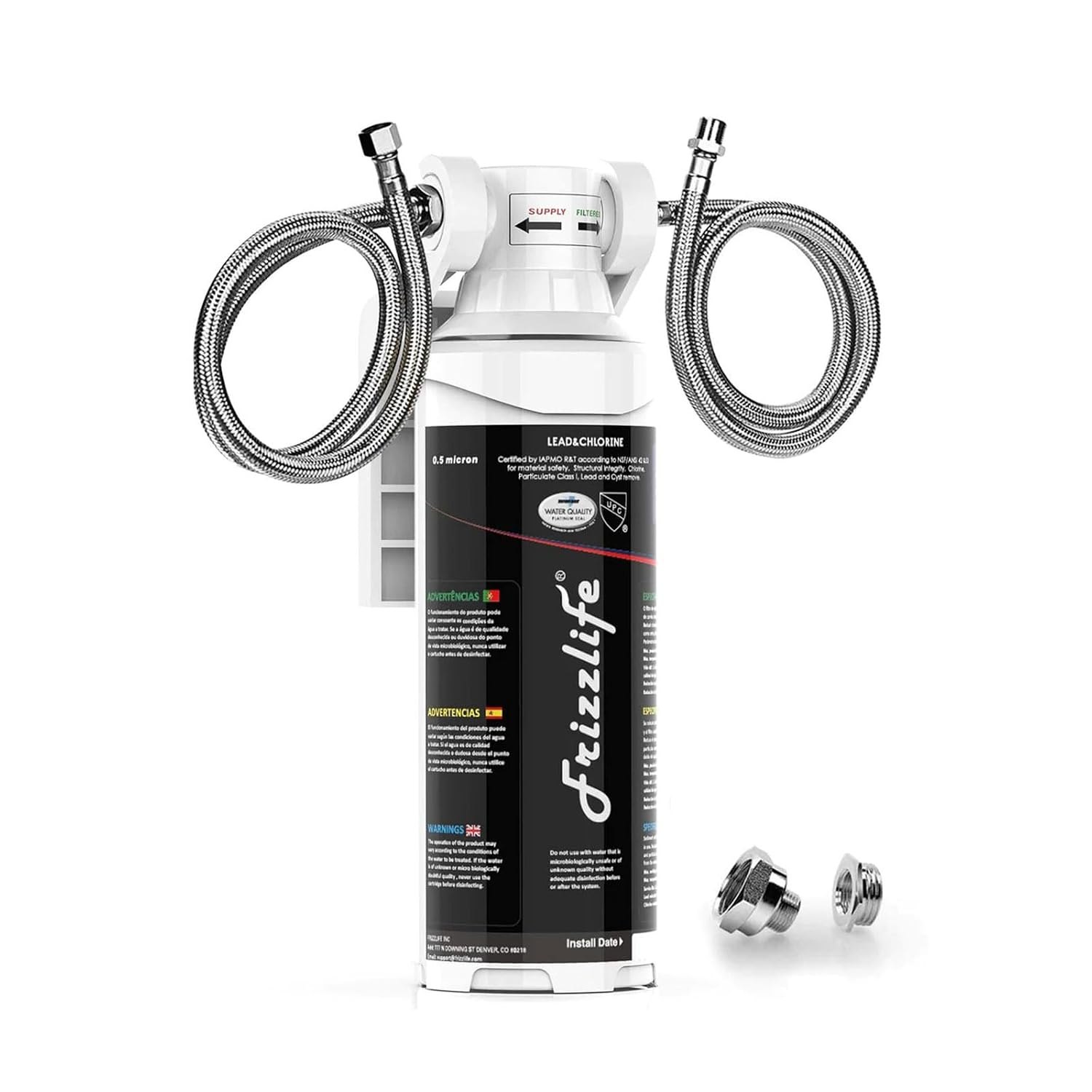
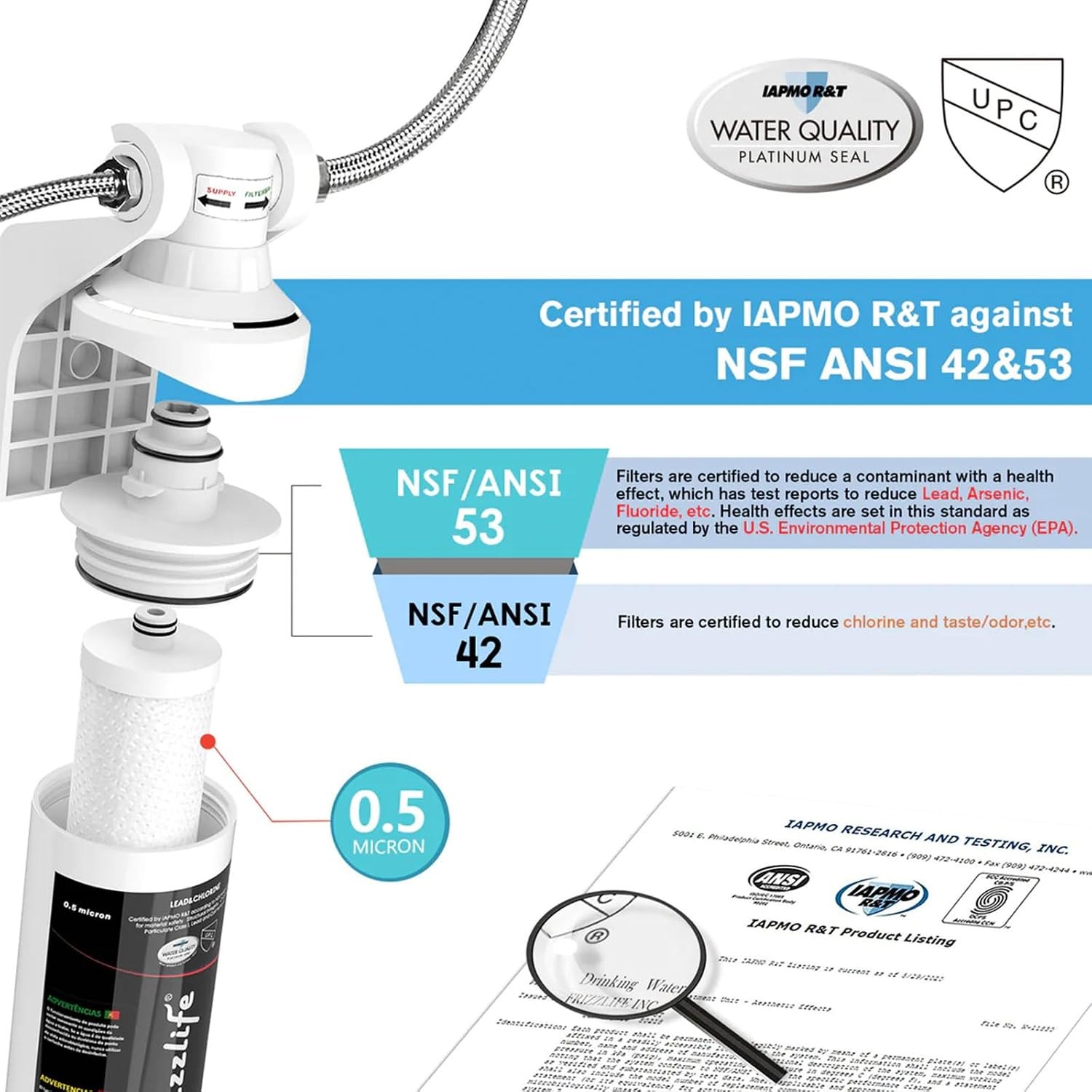
This unit is a two-stage compound cartridge in a single housing. Water from your cold water line enters through the inlet hose, passes through the cartridge and leaves through the outlet hose on its way to the tap. The process is mechanical filtration, which means water is pushed through filter media and the media holds back what it is designed to hold back.
There is no electricity involved. The power source is listed as non electric, so there is no plug, no transformer and no risk of a lead sitting in a cupboard that occasionally gets damp. The pressure already in your pipes does the work, which is why the operating pressure range of 20 to 80 psi matters. Below that range the flow suffers. Above it, a plumber will usually fit a pressure limiting valve on the line anyway.
There is also no storage tank. This is an inline water filter, so it treats water on demand as the tap runs. That keeps the footprint small and means no filtered water sits around waiting to be used.
The maker states that the system is certified to NSF/ANSI 53 and 42. That is the maker's statement, repeated here plainly and without elaboration. The system is described as designed to reduce chlorine taste and odour and sediment, and it is intended for use with drinkable mains (town) water. It is not a treatment for water of unknown quality, and it should not be used as one.
Who this suits
Households on town water who simply want better tasting water from the tap they already use are the obvious fit. If your complaint is mostly about chlorine taste and smell, particularly after the mains have been flushed, this is the category of product aimed at you.
It also suits people who are tired of the bench-top clutter. Jugs, pitchers and counter units all take space, and they all require someone to remember to refill or reposition them. A good under cupboard water filter disappears.
Renters need to think harder. This is a permanent plumbing connection, so you will need your landlord's agreement and a plumber to fit and later remove it. Some landlords are happy, some are not, and it is a conversation worth having before you order.
Anyone on tank water, bore water or an untreated supply should look elsewhere. This is not the right tool for that job.
Space, fittings and the two checks that matter
Two measurements decide whether this will work in your kitchen.
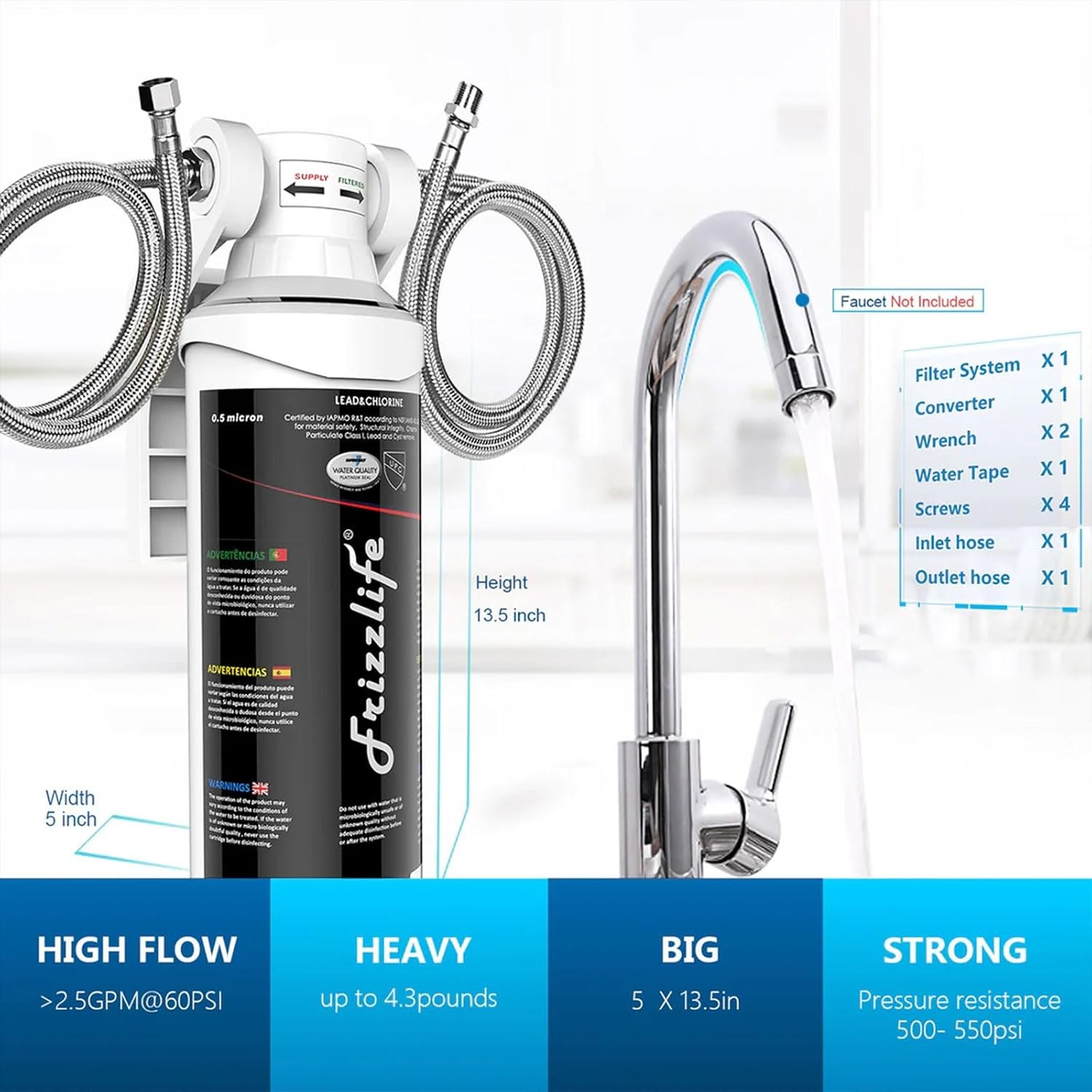
The first is cupboard space. The unit is 37.3 cm long, 17.8 cm wide and 17.2 cm high. That sounds modest until you remember what else lives under a kitchen sink: the waste trap, a bin, cleaning bottles, maybe a dishwasher hose crossing the back. Clear a space, measure it, and allow a little extra room so the cartridge can be twisted out without wrestling.
The second is your cold water line. The system comes with 3/8 inch direct connect hoses and 3/8 to 1/2 inch converter fittings, which covers the two common sizes. Ask your plumber to look under the sink before the appointment, or send a photo of the stop valve. That one check removes most of the last-minute problems people run into with a direct connect water filter.
Weight is not an issue here. At 1.91 kg the unit is light enough to mount without heavy bracing, and a plumber will secure it sensibly against a cupboard wall or the carcass.
Why installation needs a plumber
This connects to mains plumbing. That is worth saying plainly. A licensed plumber should install it, and there are several good reasons beyond the obvious one.
A plumber will check your incoming pressure against the 20 to 80 psi range the unit is rated for. They will confirm the fittings suit your stop valve rather than forcing a connection that nearly works. They will test the joints under pressure and leave the cupboard dry. And in many places, work on mains plumbing by an unlicensed person can affect your home insurance if something later goes wrong.
Installation is a short job for someone who does it daily. It is a long and expensive afternoon for someone who does not. The cost of the call-out is small compared with a slow leak under a cupboard you only open once a fortnight.
Flow rate, and why it decides whether you keep using it
Here is a thing that catches people out. A filter that slows the tap to a dribble gets abandoned. You will fill the kettle from the laundry tap instead, or you will go back to the fridge jug, and the filter becomes an expensive cupboard ornament.
This unit is rated at a maximum flow rate of 2 gpm, about 7.6 litres per minute. That is a normal-feeling kitchen tap. You can fill a kettle, rinse a colander of vegetables or run water into a pot without standing there tapping your foot. Actual flow at your tap depends on your incoming pressure and the plumbing between the filter and the spout, so a house with naturally low pressure will see less.
If flow drops over time, the usual cause is a cartridge nearing the end of its life. That is a replacement job, not a fault.
Cartridges and the maintenance rhythm
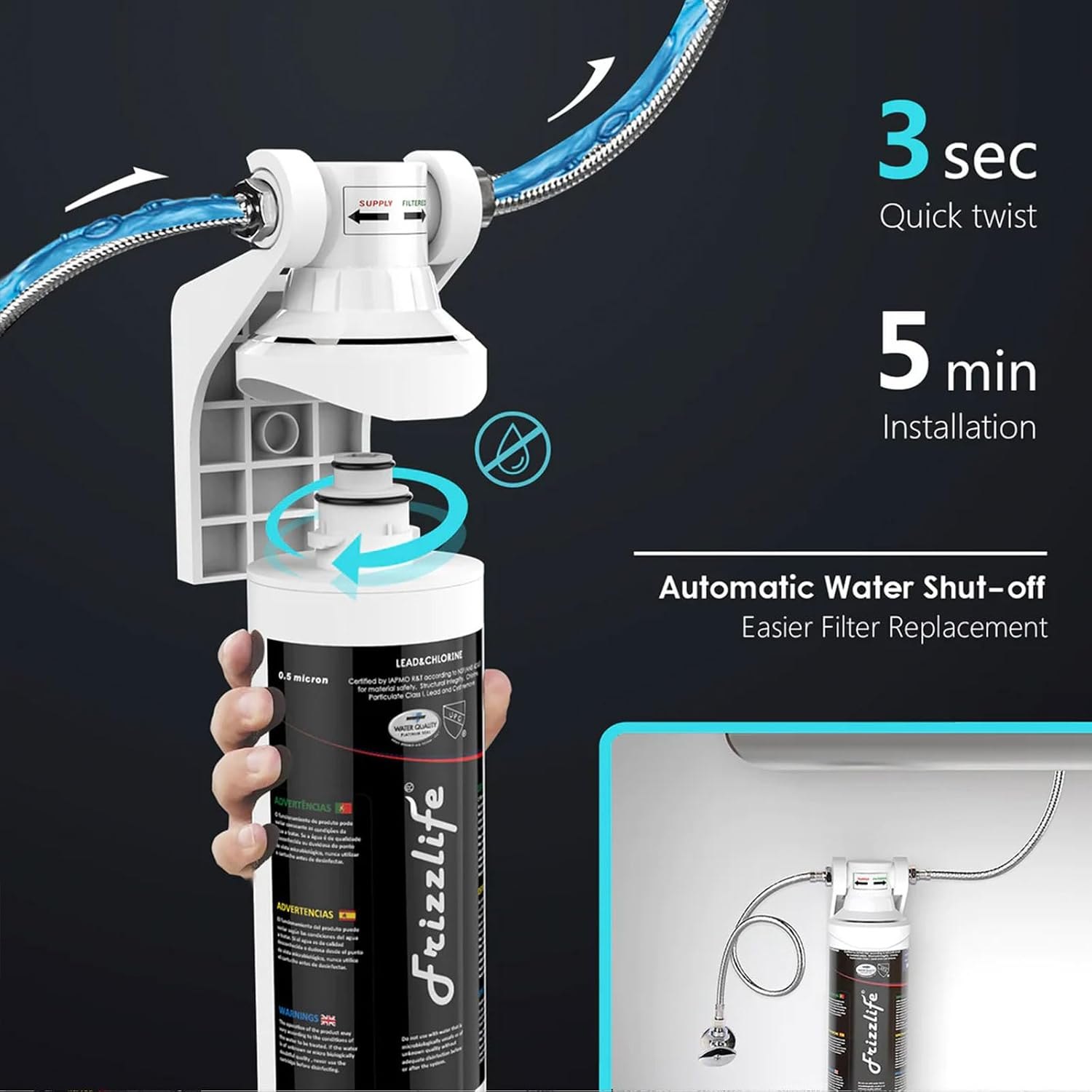
The cap on this unit twists in and out, and there is a shut off valve built into the cap itself. That means a routine cartridge swap does not require isolating the water at the wall. You twist the old cartridge out, twist the new one in, and run the tap for a few minutes to flush it.
The stated filter life cycle is 2 years or 1,600 gallons, which is about 6,055 litres. Whichever comes first is your limit. A couple in a flat will likely hit the two years. A family of five who cook a lot will hit the volume first.
Only the core cartridge is replaced. The housing and the hoses stay where the plumber put them, which is why changes stay quick after the first installation.
Write the date on a label inside the cupboard door. It sounds basic, but it is the single most reliable reminder system anyone has come up with, and it beats trying to remember whether it was this spring or the one before.
Beyond that, maintenance is almost nothing. Wipe the housing occasionally. Glance at the connections for damp patches when you reach past for the dish soap. Keep the cupboard floor dry so you would notice a drip early.
What this product does not claim
It is worth being clear about the boundaries. The maker lists chlorine reduction and sediment as what the filter is designed to address, and that is what we say. We do not claim removal percentages, and we do not claim this filter handles anything the maker has not named.
Water chemistry is local. What comes out of a tap in one town is different from the next suburb over. If you want to know precisely what is in your supply, your water authority publishes that information and will usually send it on request.
The sensible expectation is this: you are buying a tidy, non-electric filter for drinkable mains water, aimed at taste and odour from chlorine and at sediment, feeding the tap you already use.
The short version
Measure your cupboard. Check whether your cold water line is 3/8 inch or 1/2 inch. Book a licensed plumber, because this connects to mains plumbing and should not be a weekend project.
Once it is in, the system runs on mains pressure with no power, keeps the tap flowing at about 7.6 litres per minute, and asks for a cartridge change at two years or roughly 6,055 litres, whichever arrives first. The cartridge twists out, the new one twists in, and the cap has its own shut off valve so the job stays short.
If you want better tasting water without a jug on the bench or a gadget beside the kettle, that is exactly the trade this product makes.