
The complete guide
How to Choose a Water Filter Pitcher That You Will Actually Keep Using
The problem is usually taste, not the tap
Mains water in most towns arrives at the kitchen already treated and tested. The issue people run into is a sensory one. Chlorine is used in treatment and it leaves behind a smell and a flat, slightly swimming-pool taste that some people barely register and others cannot ignore. Sediment stirred up after work on the street main can add a dusty edge. Neither problem makes the water any less drinkable, but both are enough to make a jug sit untouched in the fridge while everyone reaches for something else.
That is the gap a water filter pitcher fills. It does not try to be a whole-house system. It sits in the kitchen, you fill it, and the water that comes out tastes more like nothing, which is what good water is supposed to taste like.
How a gravity filter pitcher works
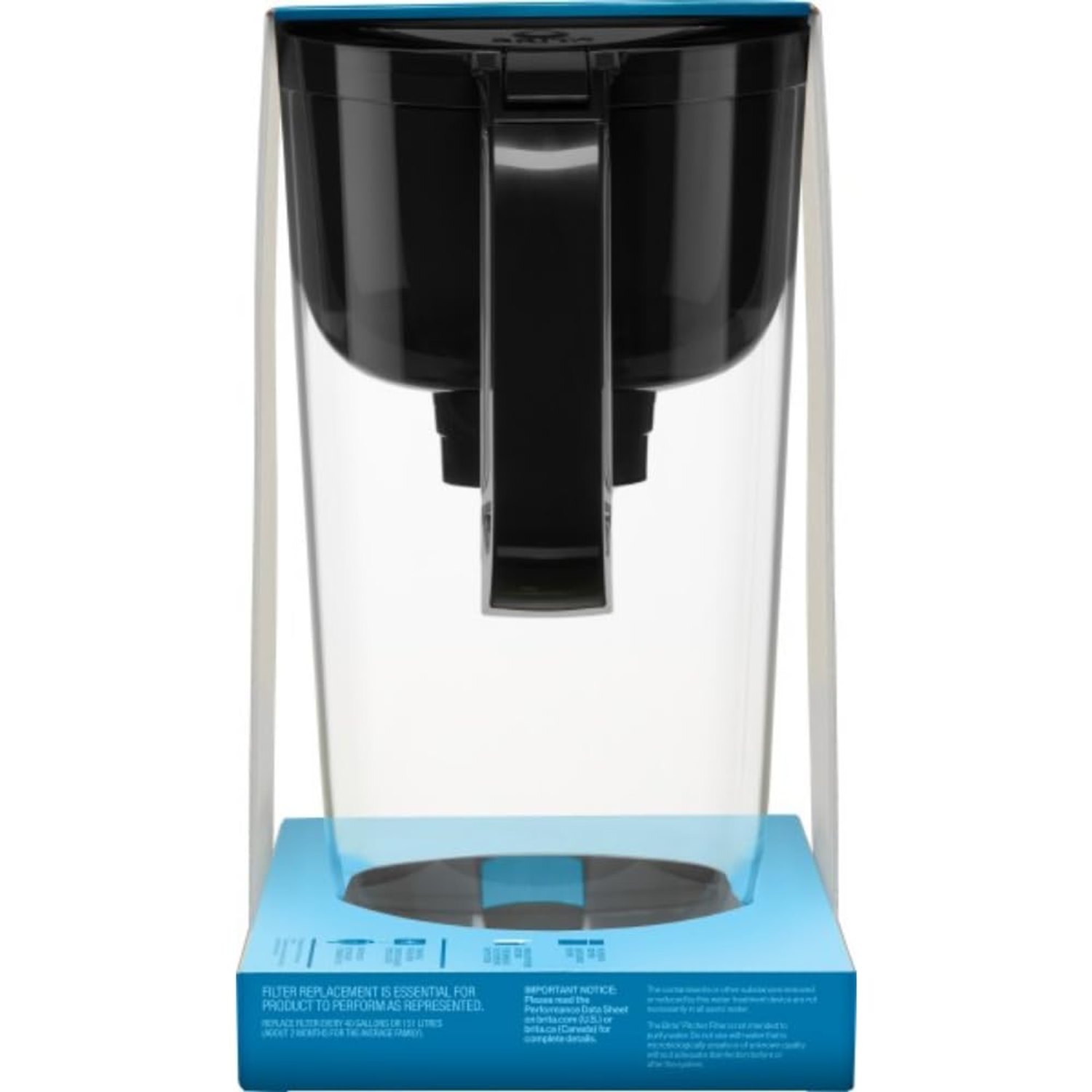
The mechanics are simple enough to explain in a sentence. There are two chambers stacked inside one jug. You pour cold tap water into the top reservoir, it drains down through a cartridge in the middle, and it collects in the lower chamber ready to pour.
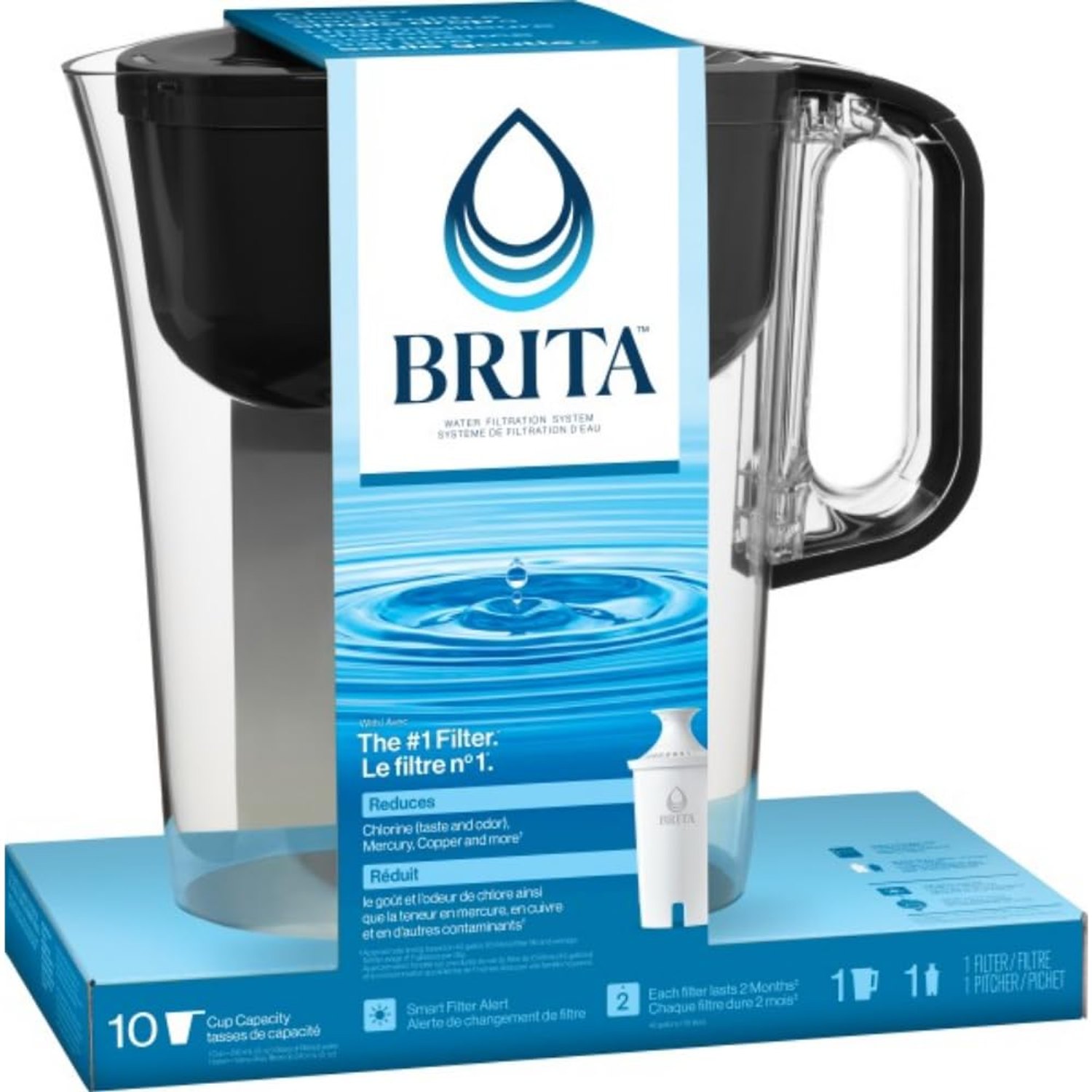
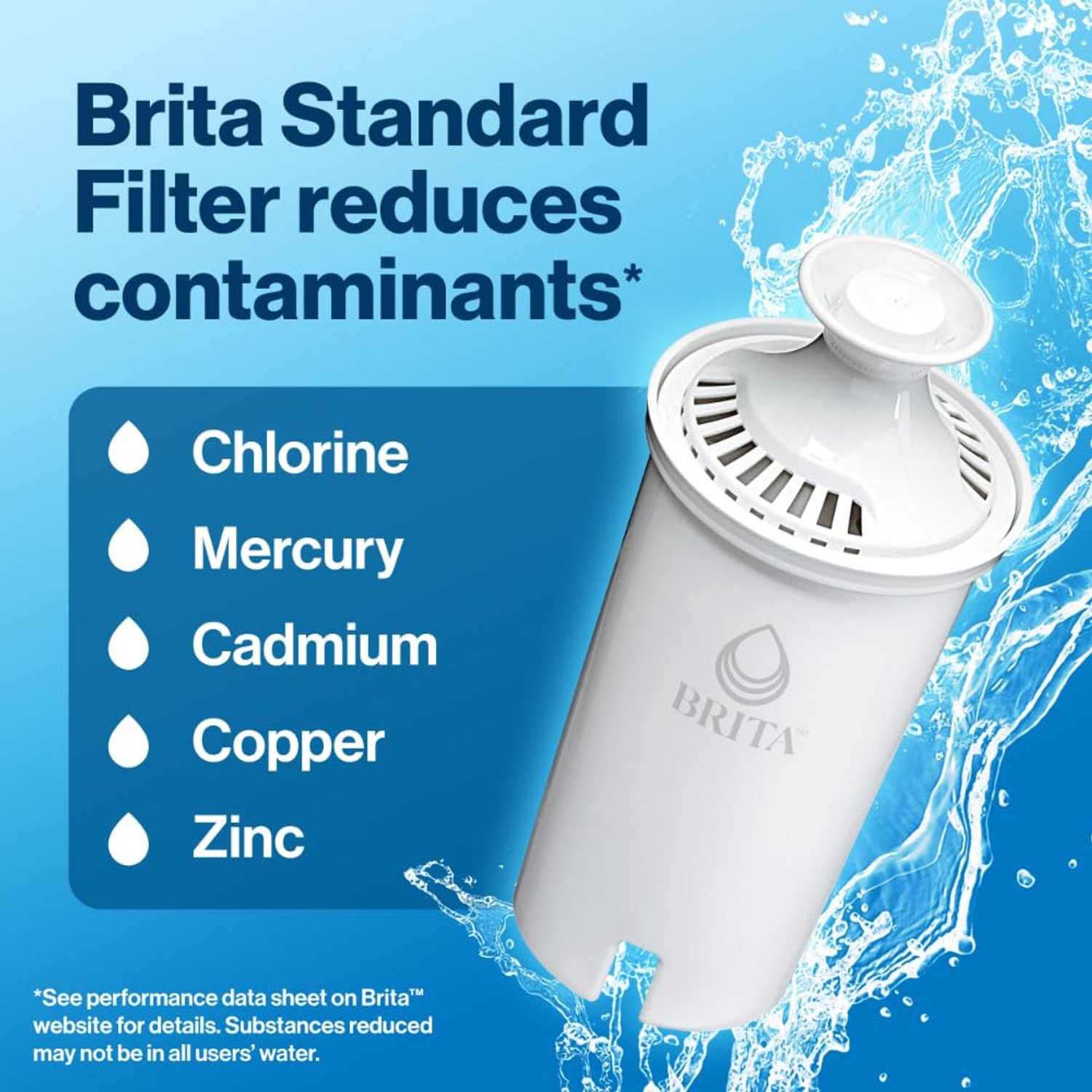
The cartridge in this filtered water jug uses activated carbon. Carbon is treated so that it develops an enormous internal surface area, far more than you would guess from the size of the cartridge. As water trickles past, some compounds stick to that surface instead of carrying on through. That is the mechanism behind reducing chlorine taste and odour. A finer screen in the same cartridge catches sediment.
Two things follow from that. First, it is not instant. Gravity moves water slowly, so a reservoir takes a few minutes to drain. Second, the carbon fills up eventually. Once the surface is loaded, it stops doing much, which is why cartridges have a service life rather than running forever. This one is listed at two months.
Does the size suit your kitchen
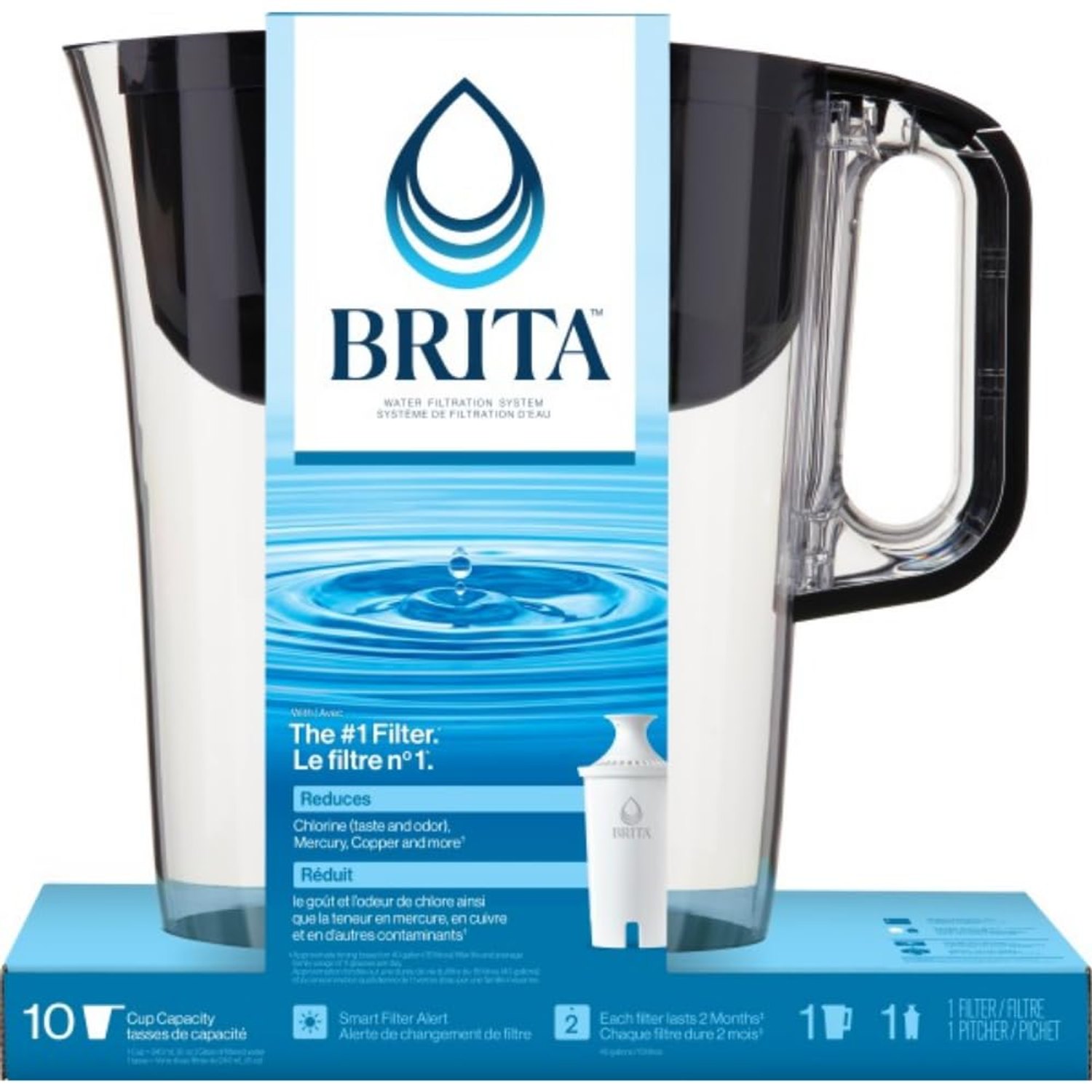
Capacity here is 2400 ml, about ten cups. In practice that is enough for a dinner table of four with refills, or a couple of reusable bottles plus a kettle fill. It is the size most households land on. Smaller jugs look tidier but need filling constantly. Larger ones get heavy when full and struggle to find a home.
Where people get caught out is the physical footprint rather than the volume. This jug measures roughly 27.6 cm long, 15.4 cm wide and 26.9 cm high. Height is almost always the deciding factor. Fridge shelves are often spaced tighter than they look, and fridge door bins vary wildly between models. Before you buy any large capacity water filter jug, take a tape measure to the shelf you plan to use and check both the clear height and the depth. If you intend to fill it while it is in the fridge, add a few centimetres for lifting the lid.
Counter storage is the easy option. At under 28 cm long it fits beside a kettle without dominating the bench, and keeping it at room temperature is perfectly fine. Some households run two, one chilling and one on the counter.
Who it suits
Renters do well with a countertop water filter jug because there is nothing to install. The installation type is listed as countertop, the power source as no power required. No plumber, no drilling, no conversation with a landlord. When you move, you pick it up and take it.
Students and small flats are the same story in miniature. A kitchen with two cupboards and no room for a tap-mounted unit can still take a jug.
Small offices work too, with one caveat. Shared jugs only stay useful if somebody owns the routine. Agree on who refills after the last pour and who diarises the cartridge change, or you end up with an empty pitcher and a cartridge that has been in since the spring.
Families with school-age kids tend to like the fridge-cold angle. A jug of cold water that tastes of nothing gets drunk. The same water at room temperature from the tap often does not.
What it is not
Worth being direct about this, because it saves disappointment. This is a pitcher with an activated carbon cartridge designed to reduce chlorine taste and odour and sediment. It is not a treatment system for water of unknown quality. It is intended for drinkable mains (town) water only. If you are on an untested well, a rainwater tank, or anything that is not supplied as safe to drink, a jug like this is the wrong tool and you should get the supply tested and treated properly first.
It is also not a water softener, and the product details list no claims about scale. The listed maximum supported water TDS is 500 ppm, which is the upper limit the maker specifies for use. Most mains supplies sit comfortably under that.
Living with it day to day
The habits that make a water filter pitcher work are small. Refill it the moment you pour the last glass, so there is always a jug working its way through. Keep it cold if you prefer cold water, since chilled water tastes cleaner to most palates regardless of filtering.
Prime the cartridge the way the instructions tell you before the first use. New carbon sheds a little black dust into the first jug or two. It looks alarming and it is simply loose filter media. Tip those first fills away, rinse the pitcher, and it settles.
Cleaning is hand washing only. Lift the cartridge out, wash the jug, lid and reservoir in warm water with a little mild dish soap, rinse thoroughly and let the parts air dry. Skip the dishwasher, skip boiling water, and skip abrasive pads, which scratch plastic and give grime somewhere to sit. A quick wash whenever you change the cartridge keeps things in good shape with almost no effort.
Cartridges need replacing on the maker's schedule, listed here as two months. Buy them a pair at a time so a spare is always in the drawer, because the swap only ever gets forgotten when you have to go out and buy one.
Comparing options sensibly
If you are weighing up the best water filter pitcher for your kitchen, there are really only four questions worth asking.
How much water does your household get through in a day? If it is more than a couple of litres, go for the larger capacity even though it is heavier to lift.
Where will it live? Measure first. A jug that does not fit the fridge ends up on the counter, which is fine if you planned for it and annoying if you did not.
How easy is it to fill? A flip-style easy-fill lid matters more than it sounds. If you have to unscrew or fully remove a lid every time, you will fill it less often.
What do the cartridges cost and how long do they last? The jug is a one-off. The cartridges are the ongoing part, and a two-month cycle means six a year.
The short version
This is a 2.4 litre gravity pitcher with an activated carbon cartridge, made for drinkable mains water, designed to reduce chlorine taste and odour and sediment. It needs no power and no plumbing, it sits on a counter or in a fridge, and it comes with one standard filter so you can use it the day it arrives. Dimensions are about 27.6 by 15.4 by 26.9 cm, material is listed as plastic, and the cartridge is on a two-month schedule.
Measure your fridge shelf, order a spare cartridge, and put a reminder in your phone for two months from the day you fit the first one. That is genuinely all the planning it needs.