

The complete guide
Countertop Reverse Osmosis Water Filters, A Practical Buyer's Guide
The problem with kitchen water
Most households land in one of two camps. Either you drink straight from the tap and quietly put up with a taste you do not love, or you buy bottled water and deal with the hauling, the storage, and the recycling pile by the back door. Neither feels great. One is a daily small annoyance, the other is a weekly chore plus an ongoing cost.
Then there is the third camp, people who looked into an under-sink filter, got a quote, found out it meant a plumber and possibly a hole drilled in the benchtop, and quietly closed the tab. If you rent, that option often is not even on the table. Your lease says nothing fixed, and fair enough.
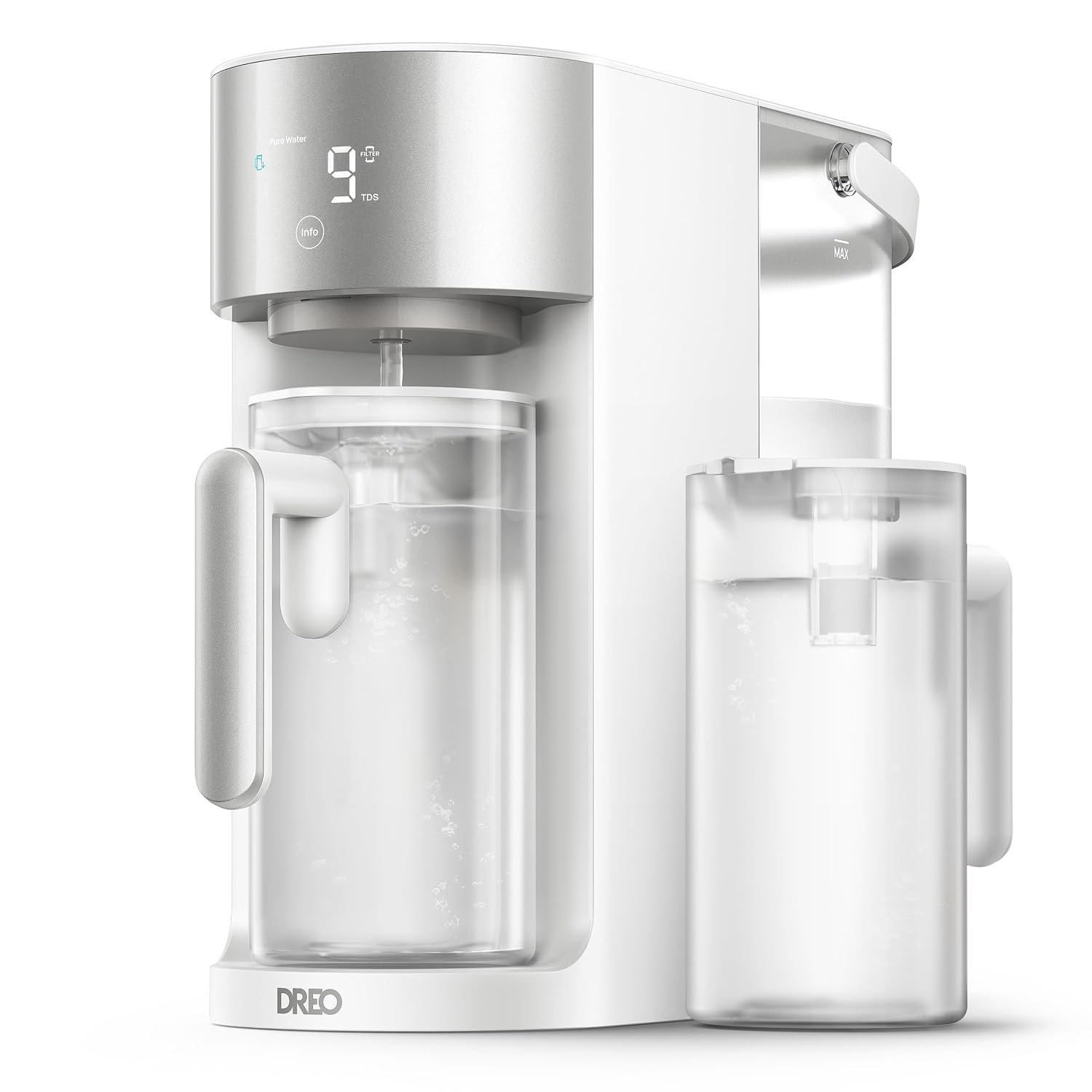
That gap is exactly what a countertop reverse osmosis water filter fills. It is an appliance, not an installation. It sits on the bench, it plugs into a normal outlet, and you feed it water from your own tap.
How a benchtop RO unit actually works
Reverse osmosis is the filtration method here, and the principle is simpler than the name suggests. Water is pushed under pressure against a membrane with extremely fine pores. Water molecules get through. A lot of what is dissolved in the water does not, and gets carried away to waste instead.
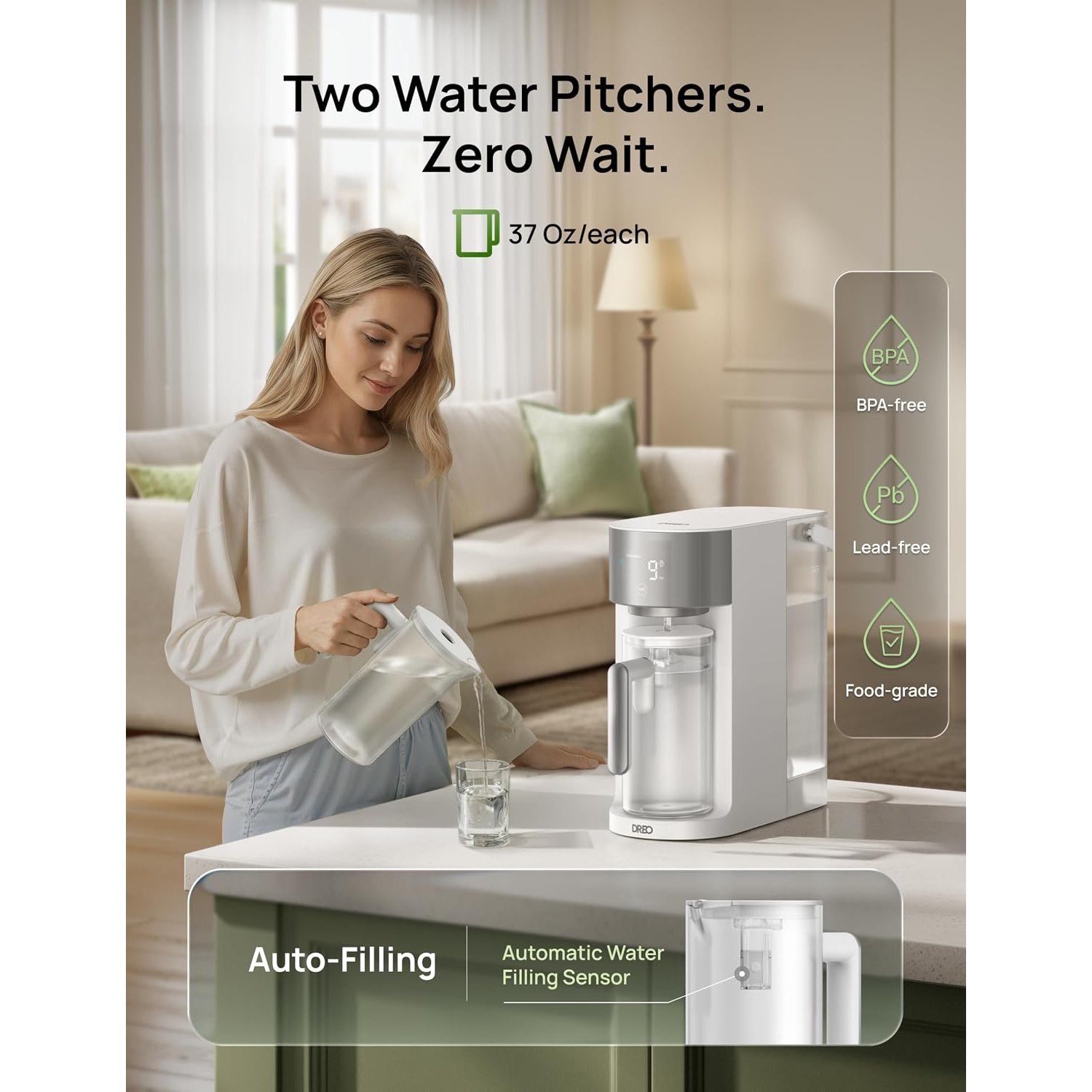
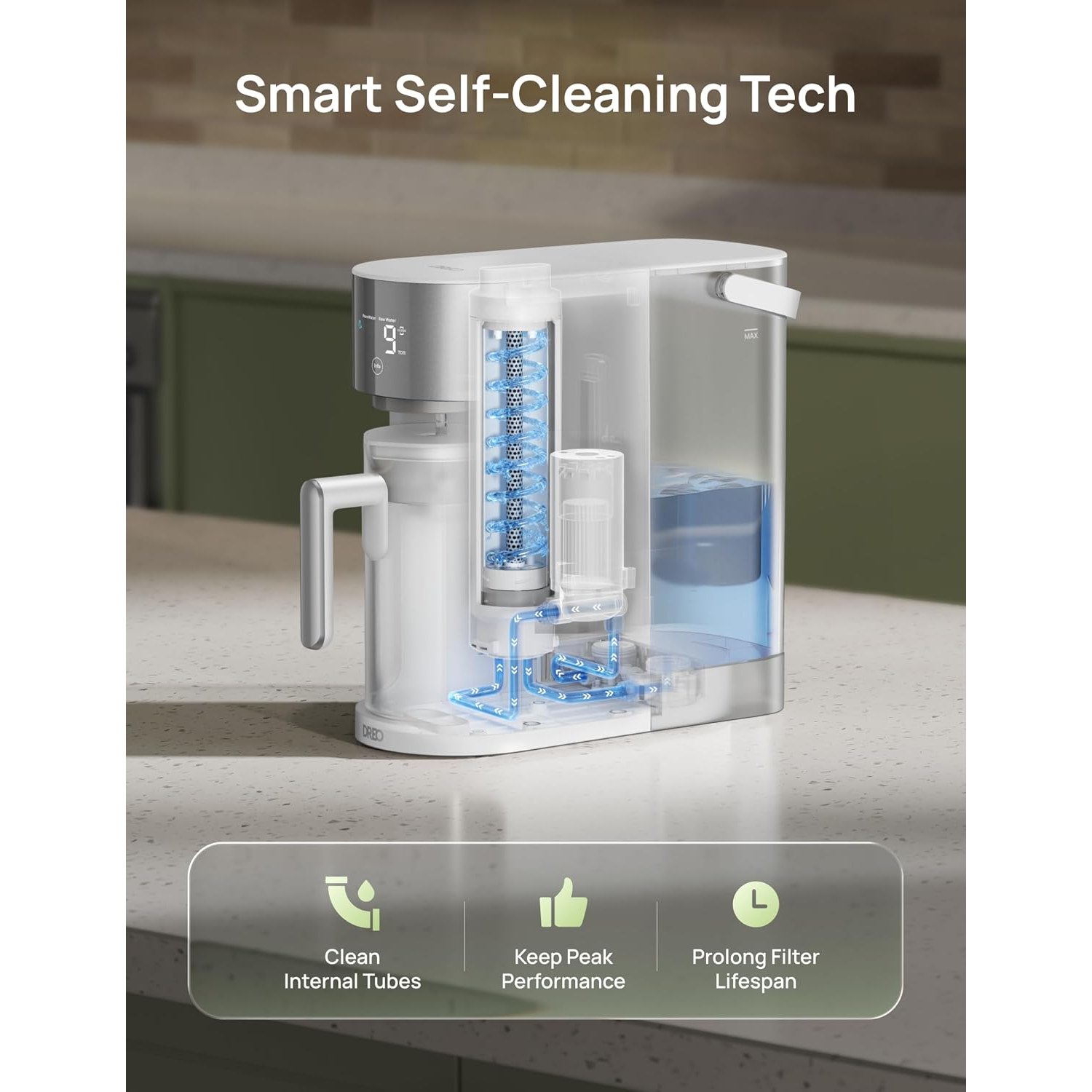
In an under-sink system that pressure comes from your mains supply and the waste line runs into your drain. In a benchtop unit like this one, a pump inside the appliance supplies the pressure, which is why it is a corded electric product rather than a passive gravity filter. You fill the tank, the unit does its work, and filtered water collects in the pitcher-style container ready to pour.
The 5 litre capacity listed for this unit is the practical number to focus on. That is roughly the volume a small household moves through in a day across drinking glasses, the kettle, and cooking. You are not standing at a tap waiting for a trickle, you are pouring from a jug.
A quick note on expectations. Reverse osmosis filtration of this kind is designed to reduce chlorine taste and odour and sediment in mains water. It is intended for water that is already drinkable. It is not a treatment for untreated sources, and it is not a water softener, which is an entirely different piece of equipment that treats the whole house.
Who this suits
Renters are the obvious group. If you cannot modify the plumbing, a benchtop unit is often the only realistic route to filtered water at home, and it comes with you when the lease ends. People searching for the best benchtop water filter for renters usually end up here for that reason alone.
Small kitchens are the second group, with a caveat. This unit is 20 cm deep, 35 cm wide, and 33.7 cm tall. That is compact for what it does, but it is still a real appliance taking real bench space. The height is the number worth checking twice, because overhead cabinets have ended more than one benchtop appliance purchase.
Offices and shared spaces work well too. No plumbing means no building manager conversation, and at 4.9 kg one person can reposition it without help. If someone in the office is researching the best office water filter, a unit with touch control and an LED display is easier for a group to share than something that relies on remembering a date.
Who it suits less: very large households who want constant on-demand volume, and anyone whose water is not from a treated town supply. In both cases a different approach makes more sense.
How to choose between benchtop filters
Start with the bench. Measure the depth from the wall or splashback to the front edge, measure the clear width, and measure the height to the underside of any cupboard. Write those three numbers down before you shop. It sounds obvious and it is the step people skip.
Next, look at the power situation. This is a corded electric appliance, so it needs a reachable outlet and a cord run that does not cross a wet zone or a walkway. If your only free bench space is across the kitchen from a power point, factor that in.
Third, think about capacity versus refill frequency. A 5 litre tank is a reasonable middle ground. Smaller tanks mean more trips to the tap. Larger tanks mean more bench footprint. Match it to how much water your household actually drinks on a normal day, not a hot day.
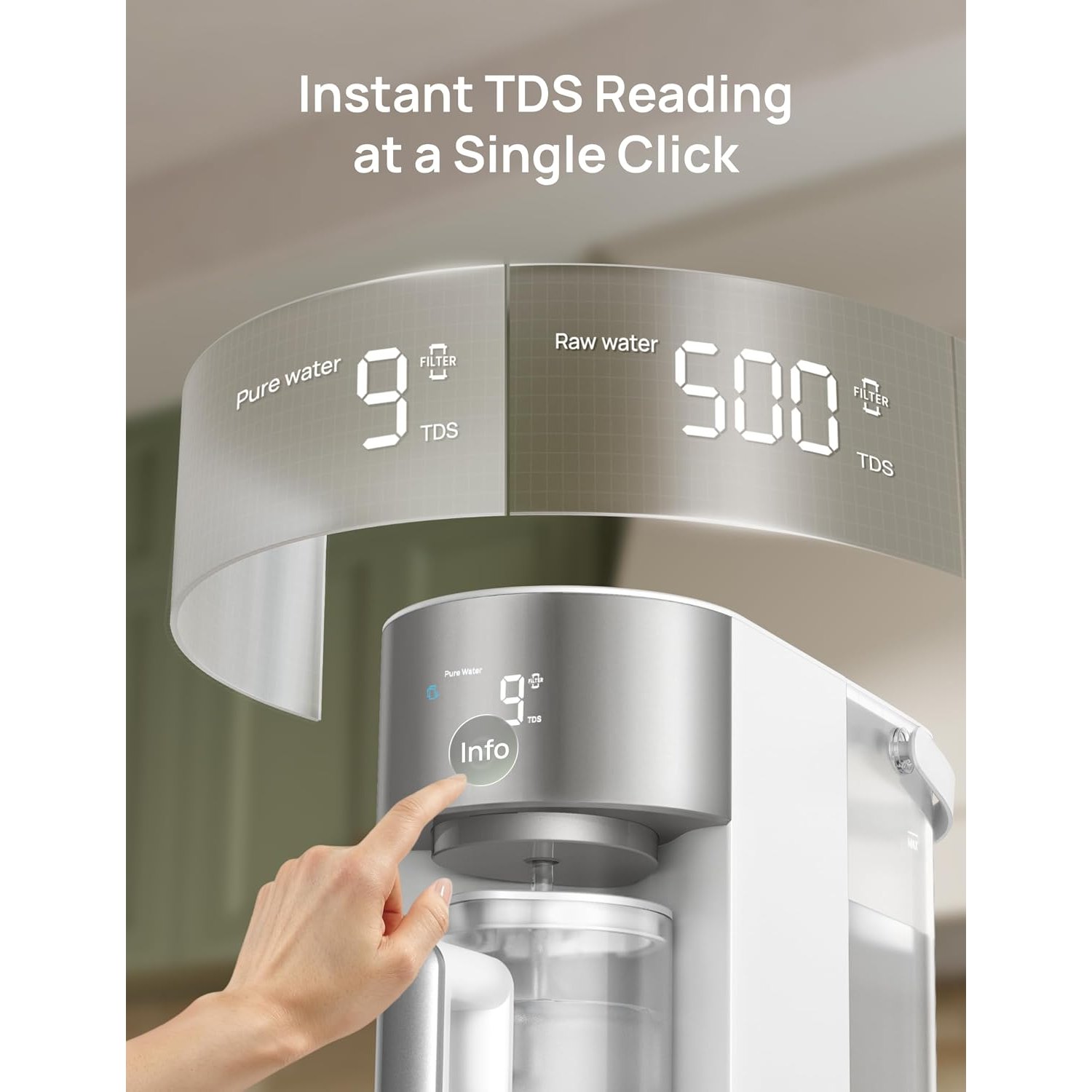
Fourth, consider how the unit tells you what it is doing. An LED display with touch control takes the guesswork out of cartridge timing. The difference between a filter changed on schedule and one left running past its life is significant, and a display that nags you is genuinely useful.
Finally, think about the cartridge itself. Replacement is part of owning any filter. This one uses a twist-in cartridge, so swaps are a hand job rather than a tool job. What matters is that you can get replacements and that you follow the maker's schedule rather than your own optimism. Anyone comparing the best twist in replacement filter system designs will tell you the fiddly ones are the ones that get neglected.
Living with it day to day
Setting up is short. Unbox it, put it on a flat stable bench, plug it in, and follow the instructions that come with it for the first run. A new cartridge normally needs an initial flush before you drink the water, so do not skip that step.
The daily routine is just refilling. Fill the tank from your tap, let the unit work, pour from the pitcher. Most people settle into topping it up once in the morning and once in the evening.
Cleaning is light. Unplug first, then wipe the plastic body with a soft damp cloth and dry it. Rinse the tank and pitcher with plain water now and then and let the parts air dry properly rather than sealing them up wet. Skip abrasive pads and strong solvents on the plastic, since scratches collect grime and dull the finish.
If you are going away, empty the tank and pitcher, let them dry, and unplug the unit. When you come home, rinse and run a fresh cycle before you drink from it. Standing water in any appliance is best avoided.
Keep the unit out of direct sun and away from the oven or a radiator. Plastic and heat are not friends, and sunlight on a water tank is never a good combination.
The short version
A countertop reverse osmosis water filter is the practical answer when you want better-tasting drinking water at home but cannot or do not want to touch the plumbing. This one is a 5 litre pitcher-style benchtop unit, 20 cm by 35 cm by 33.7 cm, weighing 4.9 kg, with an LED display and touch controls, running from a standard outlet.
Use it with drinkable mains water. Measure your bench before you order, particularly the height. Change the cartridge on the maker's schedule, because a filter past its life is not doing the job you bought it for. Keep it clean, keep it dry when it is not in use, and it will quietly handle your drinking water without ever needing a tradesperson at the door.