
The complete guide
The Buyer's Guide to RV Water Filters and Inline Hose Filters
The campground tap problem
You pull into a site, unroll the hose, screw it onto the post, and fill the tank. Then you make a cup of tea and it tastes like a swimming pool. Or you pour a glass of water and there is a fine grit at the bottom of it an hour later.
This happens because the water you are drawing is treated town water, and treated town water carries a disinfectant residue by design. How strong that tastes varies hugely from one place to the next. Add in an old standpipe, a long run of buried pipe, and a hose that has been sitting in the sun since last season, and the water arriving at your rig can taste and smell quite different to what came out of the same system in town.
None of this means the water is a problem. It means the taste is a problem. And taste is exactly what a carbon filter is for.
How an inline hose filter works
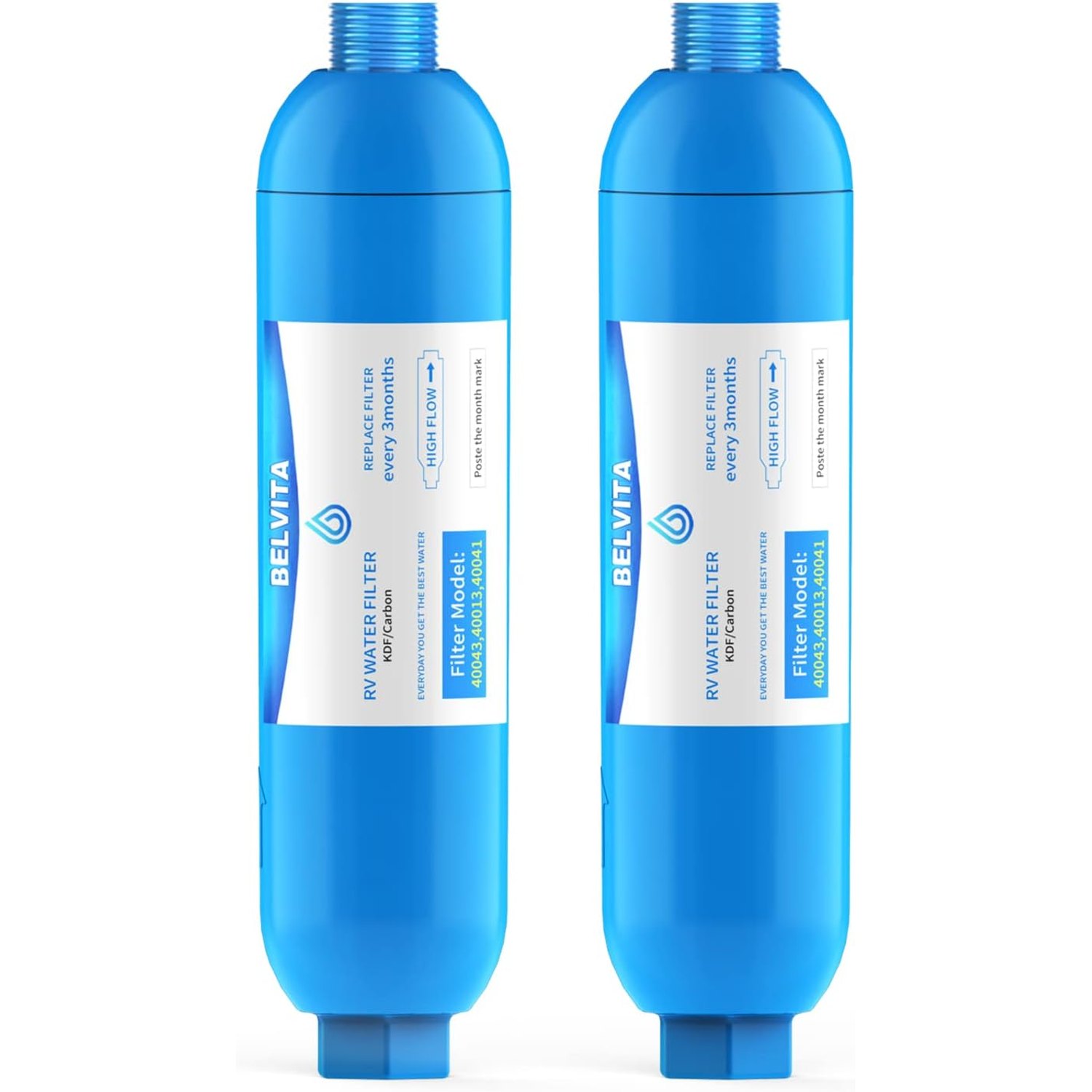
An inline RV water filter is a sealed plastic cylinder with a hose fitting on each end. Water goes in one side, passes through a packed bed of media, and comes out the other.
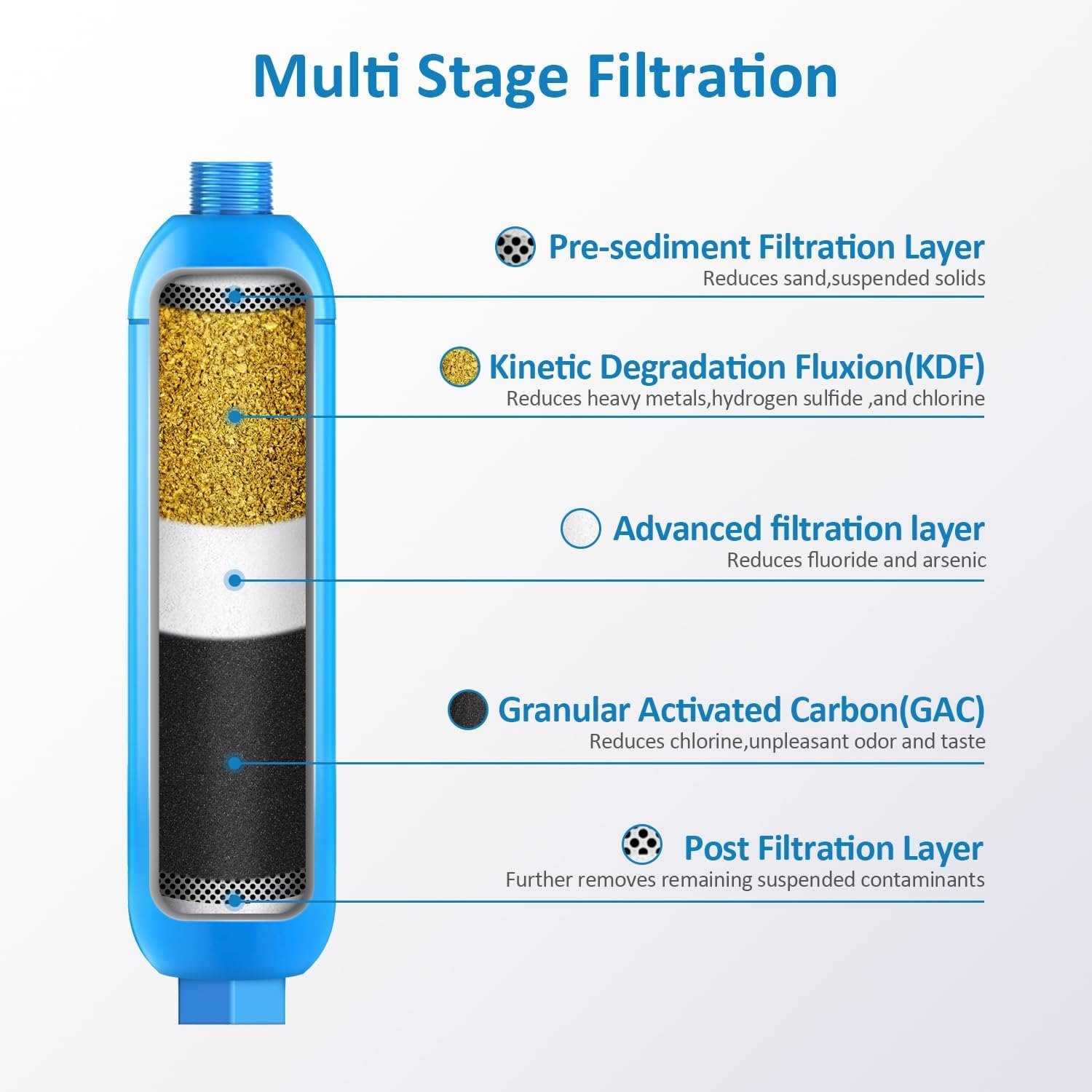
The main media is granular activated carbon. Carbon is treated so that its surface is riddled with tiny pores, which gives a small handful of it an enormous internal surface area. As water moves slowly through that bed, the compounds responsible for chlorine taste and odour are designed to be held back. This filter pairs that carbon with KDF media in the same housing.
The second job is mechanical. The packed bed also acts as a physical barrier, which is why an inline filter is designed to reduce sediment as well as taste. That is the grit you would otherwise find in the bottom of a glass or settling in your freshwater tank.
What a filter like this is not doing is treating water that was not drinkable to begin with. It is for use with drinkable mains (town) water. If you are drawing from a creek, a dam, or any source you cannot vouch for, this is the wrong tool entirely.
What is in this pack
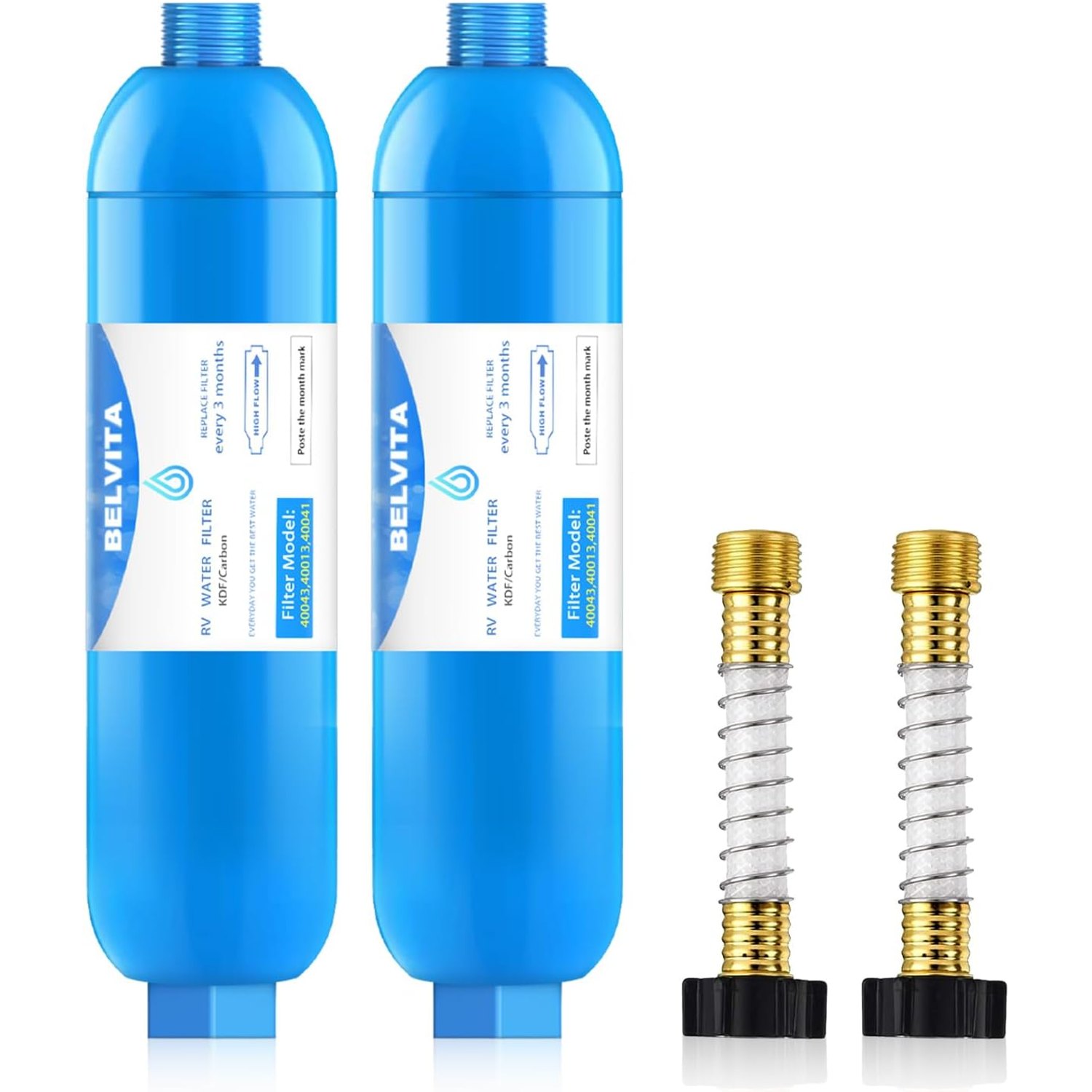
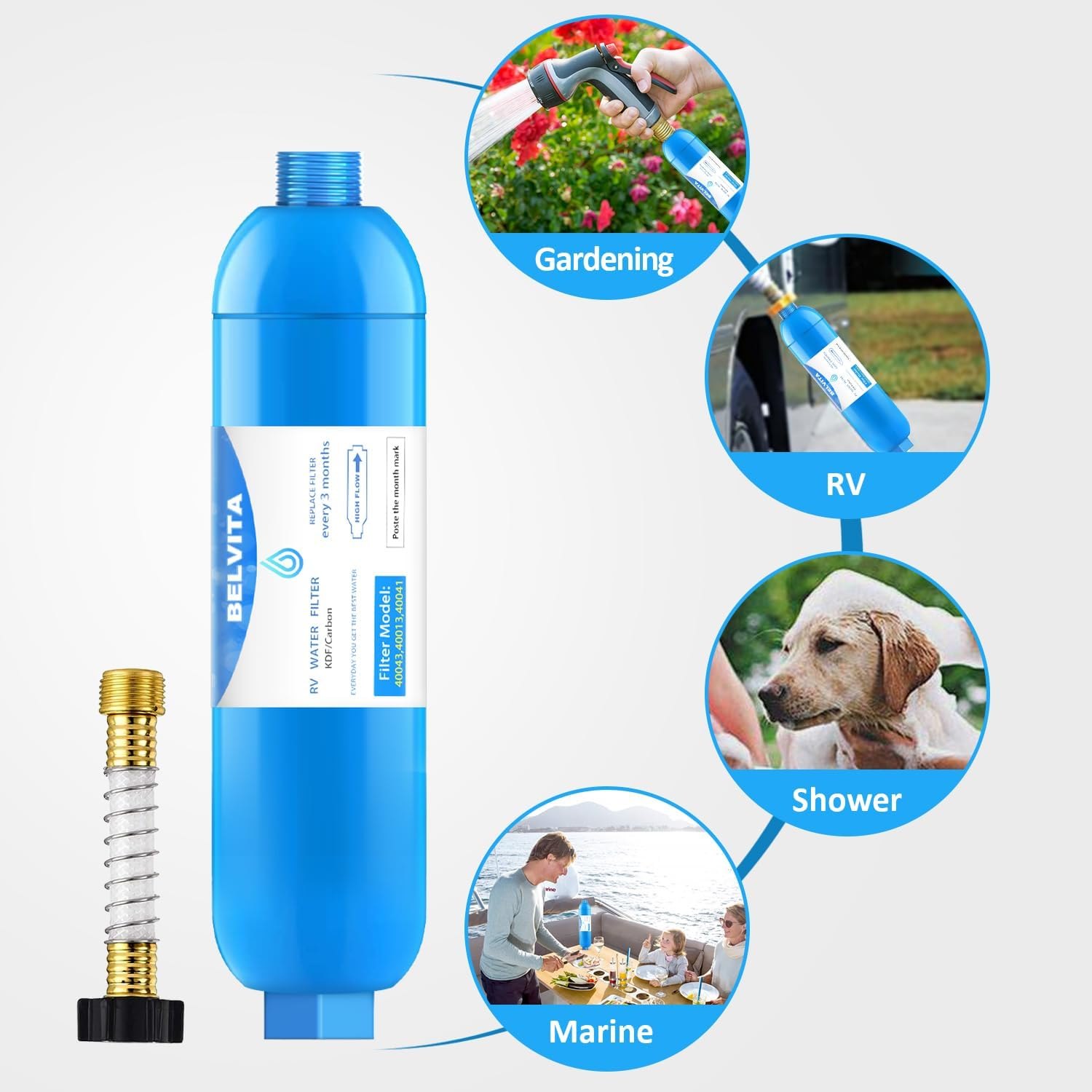
Two filters and two flexible hose protectors. Each filter is about 6.4 cm across and 27.7 cm long, and the pack weighs about 862 g. The housing is plastic and the media includes charcoal.
The two-pack matters more than it sounds. The replacement schedule here is every three months of use, and if you are on the road for a season, that is one change mid-trip. Having the second one already in the bin saves you a detour to find a replacement in a town that may not stock one.
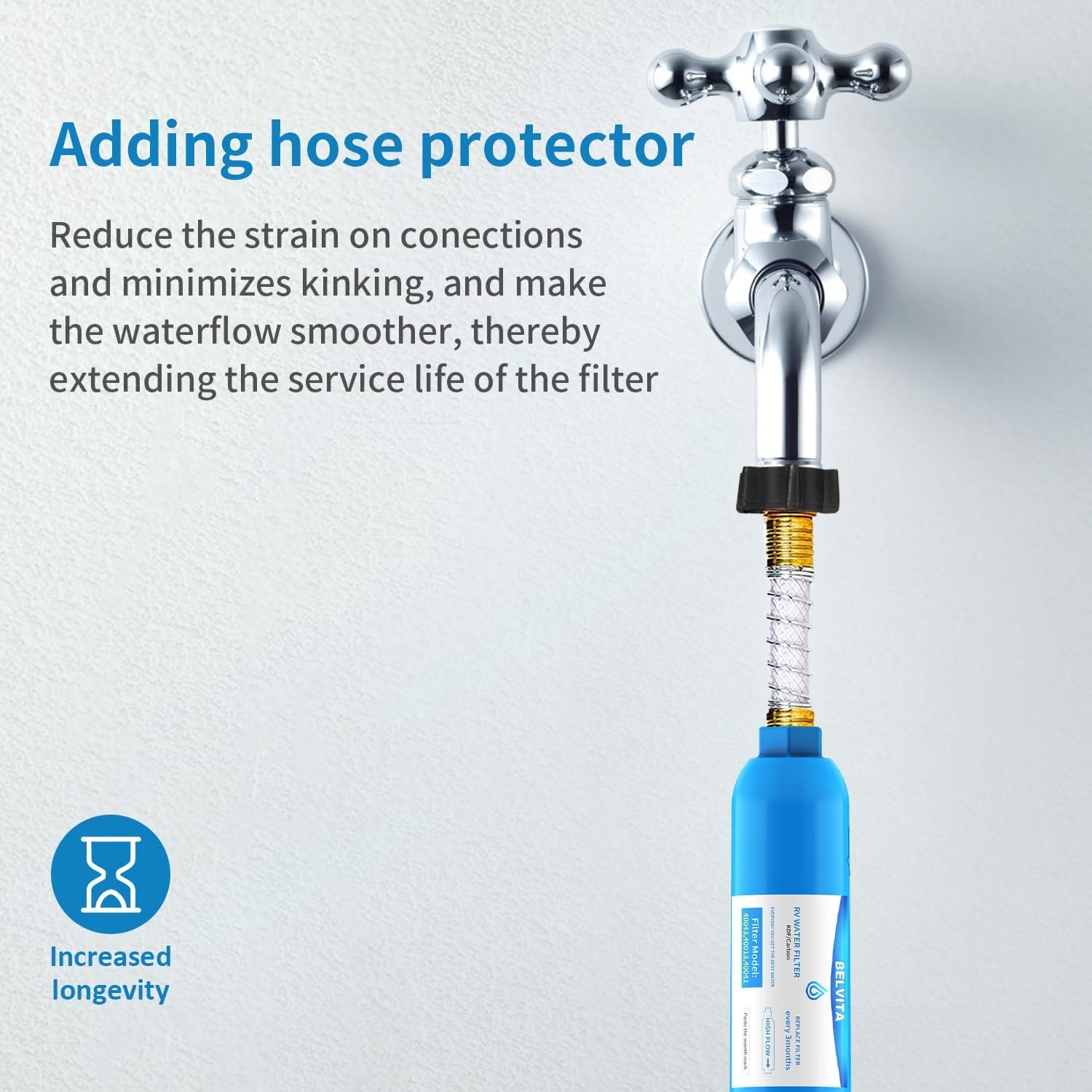
The hose protectors are the small detail people appreciate later. They are flexible sleeves that go over the connection and take the sharp bend out of the hose where it meets the filter fitting. Park close to the post, which almost everyone does, and that bend is where the hose kinks. A kink there cuts your flow and puts strain on the fitting. The protectors keep the curve gentle.
Setting it up
There is nothing clever about the install, which is the point.
Look for the flow direction marked on the body. The hose running from the tap goes on the inlet side. The hose running to your rig goes on the outlet side. Thread them on by hand, firm but not forced, and slide the protectors over each connection.
Before you connect the outlet to your rig, run water through the filter for a few minutes with the outlet pointed at the ground. A new carbon cartridge sheds a bit of loose dust on its first wetting, and a short flush clears it out. You may see the water run slightly grey at first. That is normal and it settles quickly.
If you use a pressure regulator, and in an RV you should, most people put the regulator at the post first and the filter after it. That way the filter sees a controlled pressure rather than whatever the campground is pushing.
Who it suits
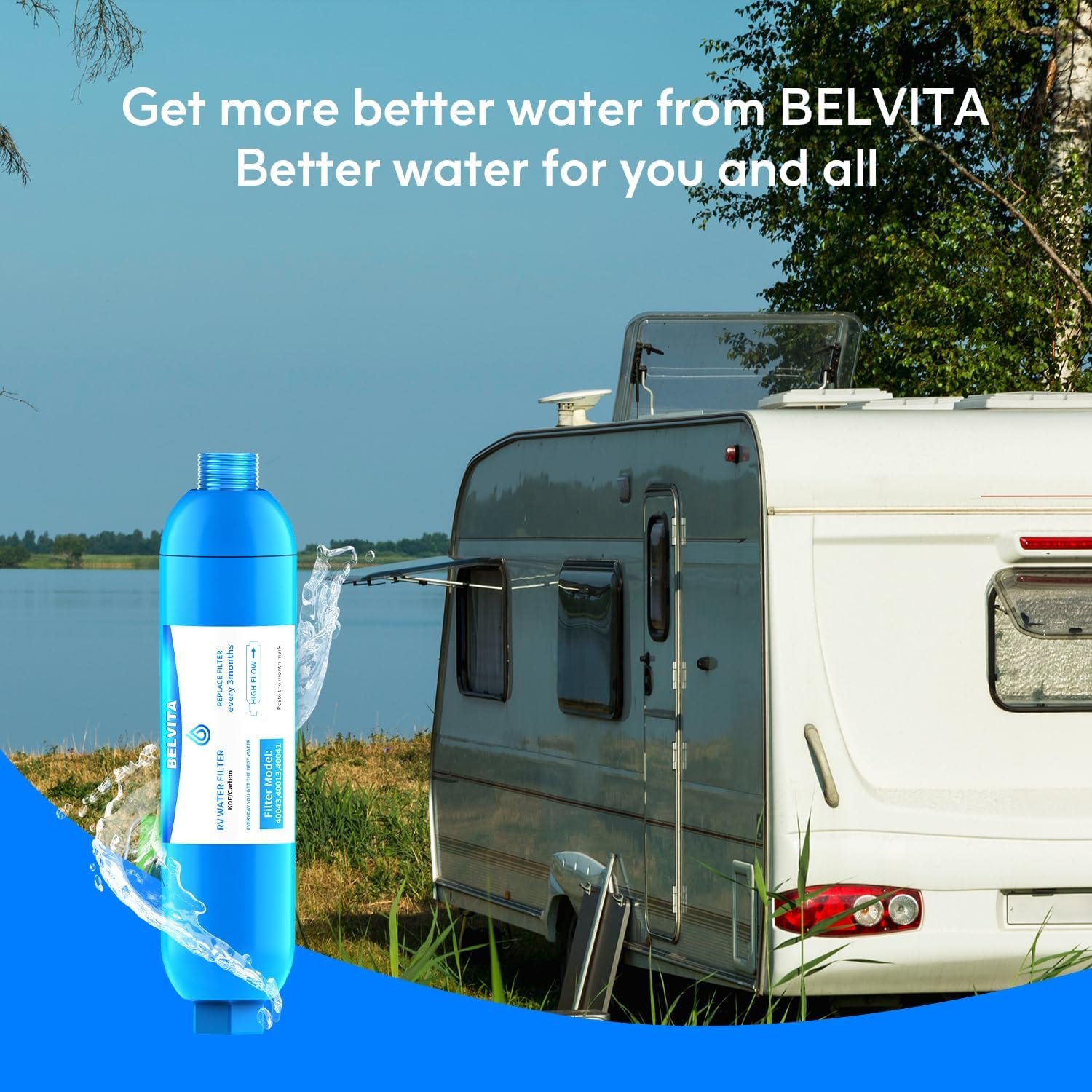
The obvious audience is anyone in a travel trailer, motorhome, fifth wheel or campervan who hooks up to site water. If you are filling a freshwater tank from a hose, a filter in that line keeps sediment out of the tank, and a tank is a lot harder to clean than a cartridge is to change.
Boats on a dock supply are in the same boat, so to speak. So are people with a seasonal cabin on town water, where the line sits unused for months at a time.
It also gets used well away from camping. Because it fits a standard garden faucet, a good inline hose water filter finds work on an outdoor tap for an outdoor kitchen, a garden line, a pet bath station, or washing gear down without leaving spots.
If you only hook up two or three weekends a year, a single filter may last you across several trips, though the three-month in-use schedule still applies once you have started using it.
How to choose
A few things are worth thinking through before you buy any camper water filter.
Connection type. Standard garden hose thread is the common language of RV plumbing. This filter uses it, so it drops into a normal hose kit without adapters.
Service life and schedule. Every filter is a consumable. The useful question is not whether it will eventually need changing but whether you can live with how often. Three months of use is a typical interval for a hose filter of this size, and the two-pack covers the first change for you.
Storage space. At roughly 28 cm long, this one lives easily in a hose bin. Larger canister systems do more but take up a lot more space and need a mounting spot.
Hose protection. If a filter does not come with protectors, your hose will kink at the fitting sooner or later. Having them in the box is a small saving of frustration.
Honest expectations. A carbon inline filter is a taste, odour and sediment filter. If you have a specific water quality concern, that is a conversation to have with your local water authority, not something to solve with a hose accessory.
Looking after it
Flush a new cartridge before first use. Keep the flow direction correct. Drain the filter when you pack up rather than leaving water sitting inside it for weeks.
Never let it freeze. Water expands when it turns to ice and a sealed plastic housing is not built to absorb that. If the overnight forecast is near zero, disconnect, drain and bring it inside.
Store the spare dry, in its packaging, out of direct sunlight. When a cartridge reaches the end of its three-month working life, drain it, let it dry, and bin it. There is no rinsing it back into service.
If your flow suddenly drops, check the hose for a kink before you blame the filter. Nine times out of ten the hose is pinched somewhere, often right at the post.
The short version
An RV water filter is one of the cheapest upgrades you can make to a hose kit, and one of the few you notice every single day. It threads onto a standard hose, takes a minute to fit, and is designed to reduce the chlorine taste and odour and the sediment that make campground water unpleasant to drink.
This pack gives you two filters and two hose protectors. Use it with drinkable mains water, flush it before first use, keep it from freezing, and swap the cartridge every three months of use. Do that and your morning coffee stops tasting like the tap it came from.