

The complete guide
Faucet Water Filter Buyer's Guide
The problem with the glass of water on your bench
Most mains water is treated before it reaches you, and chlorine is part of how that happens. It does its job in the pipes, then arrives in your kitchen carrying a smell that sits somewhere between a swimming pool and a damp towel. Some houses barely notice it. Others taste it in tea, in coffee, in a pot of rice, and in the first glass of the morning.
Sediment is the other everyday nuisance. Fine grit, rust flecks after pipe work in the street, a cloudy glass when the mains have been shut off and turned back on. None of it is dramatic. It is just mildly unpleasant, and it is the kind of thing you stop noticing until a visitor pulls a face at your water.
The usual responses are a jug in the fridge or bottles from the shop. The jug is slow and you forget to refill it. The bottles are heavy to carry and awkward to store. A faucet water filter solves the same problem in a different place, right at the tap, with no waiting and no restocking.
How a tap-mounted filter works
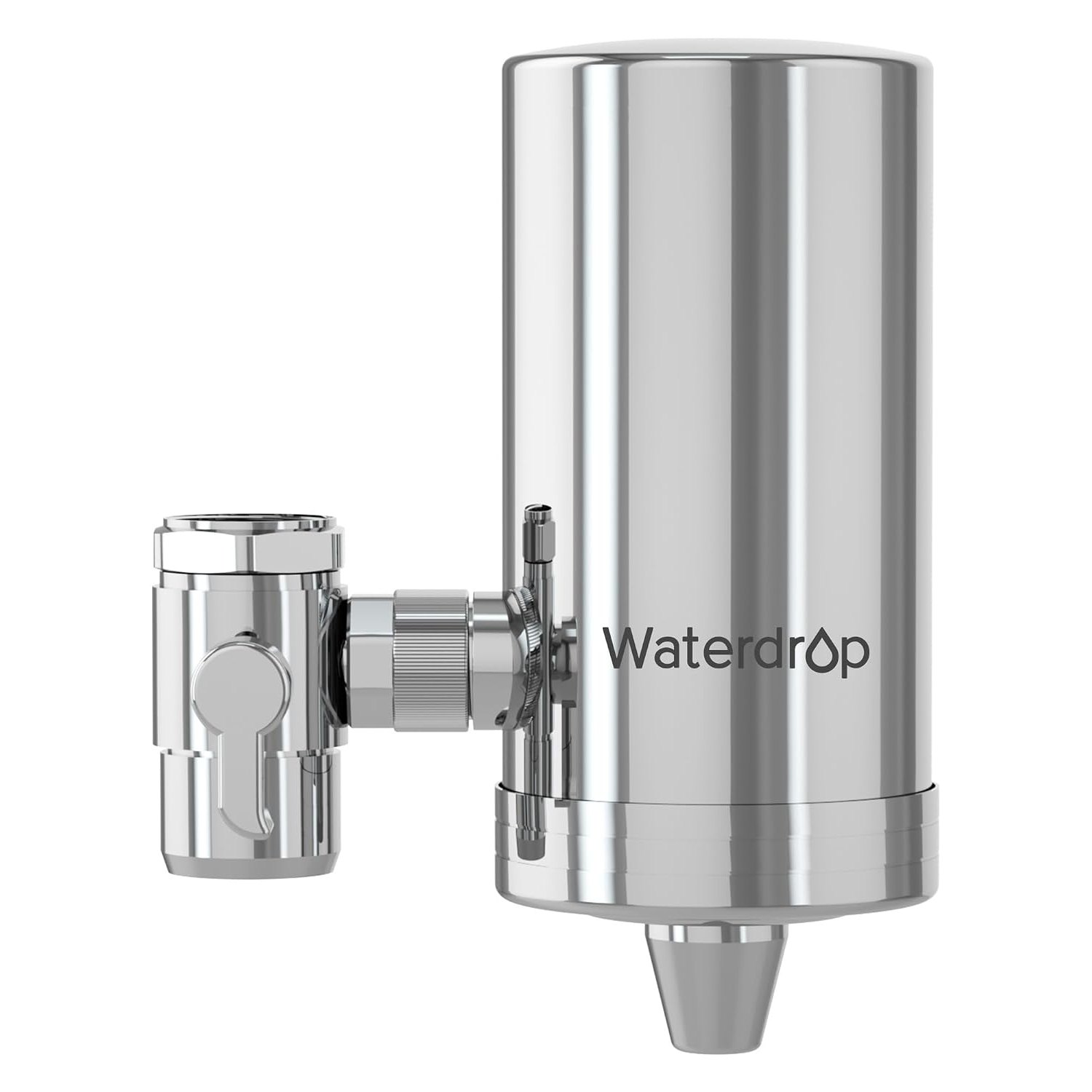
The idea is simple. Water from your mains supply normally runs straight out of the spout. With this unit fitted, there is a small diverter in the body. Flick it one way and the water behaves as it always did. Flick it the other and the water is pushed through the cartridge inside the housing before it reaches you.
Inside that cartridge is filtration media that water has to pass through rather than around. This one also uses a mineralisation media stage. Because the water is forced through, flow is narrower than a wide open tap, which is why the rated maximum here is 0.5 gpm, or about 1.9 litres a minute. In practice that fills a glass quickly and a kettle in a reasonable time.
The cartridge is a consumable. It has a rated capacity of 320 gallons, roughly 1,210 litres, with a filter life cycle of about three months. That figure assumes typical household drinking and cooking use. If you run every litre of washing up through the filtered side as well, you will reach the capacity much faster, which is exactly why the diverter is there.
What this one is built from
The housing is food-grade 304 stainless steel. It is shaped with a deep drawing process, which means the body is formed from a single piece rather than assembled from parts and welded. No joints along the housing is a sensible thing in a part that spends its life getting splashed.
At 577 g it has real weight to it. The dimensions are 10.49 x 5.89 x 13.18 cm, so it is compact, though it does add height beneath your spout. The spout on the unit itself rotates a full 360 degrees, so you can push it aside while you rinse a roasting tray and swing it back over a glass afterwards.
Operating conditions are worth noting. The stated temperature range is 5 to 38 degrees Celsius, so cold water only. Operating pressure is 100 to 689 kPa, about 15 to 100 psi, which covers the great majority of household plumbing.
Who it suits
Renters get the most obvious benefit. There is no drilling, no cabinet modification and nothing to disconnect, so the unit comes off when you move and goes onto the next tap. Anyone who has priced an under sink install knows why the best filter for rental kitchens is usually one that leaves no trace.
Small kitchens are the next group. If you do not have room under the sink for a canister and a tank, a tap-mounted unit uses space you already have. The same logic applies in a caravan or motorhome galley, where a filter for RV use has to be compact and has to work without power.
Second bathrooms, laundries and pet areas all work too, provided the tap accepts a tap-mounted fitting and the supply is drinkable mains water. It is not for untreated supplies, well water or tank water.
What it is not
Being clear about limits saves disappointment. This unit is not designed to lower TDS readings, so if you own a meter and are chasing a lower number, this is not the tool for that job. It is also not a water softener. Softening is a different process handled by different equipment, usually plumbed into the whole-house supply.
It is designed to reduce chlorine taste and odour and sediment in drinkable mains water. That is the honest description of what it does, and for most households with a smell or a grit complaint, that is the complaint being solved.
How to choose and check the fit
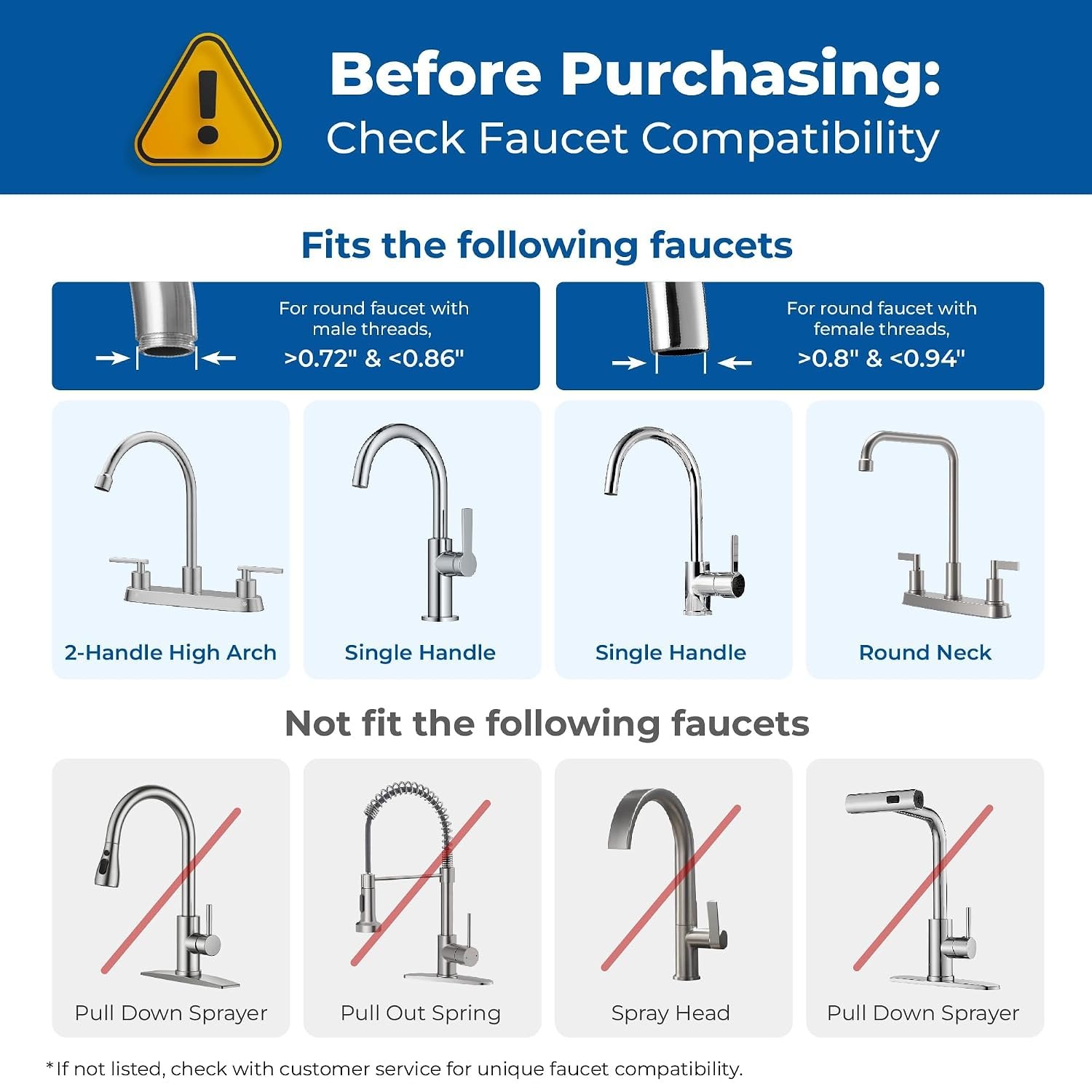
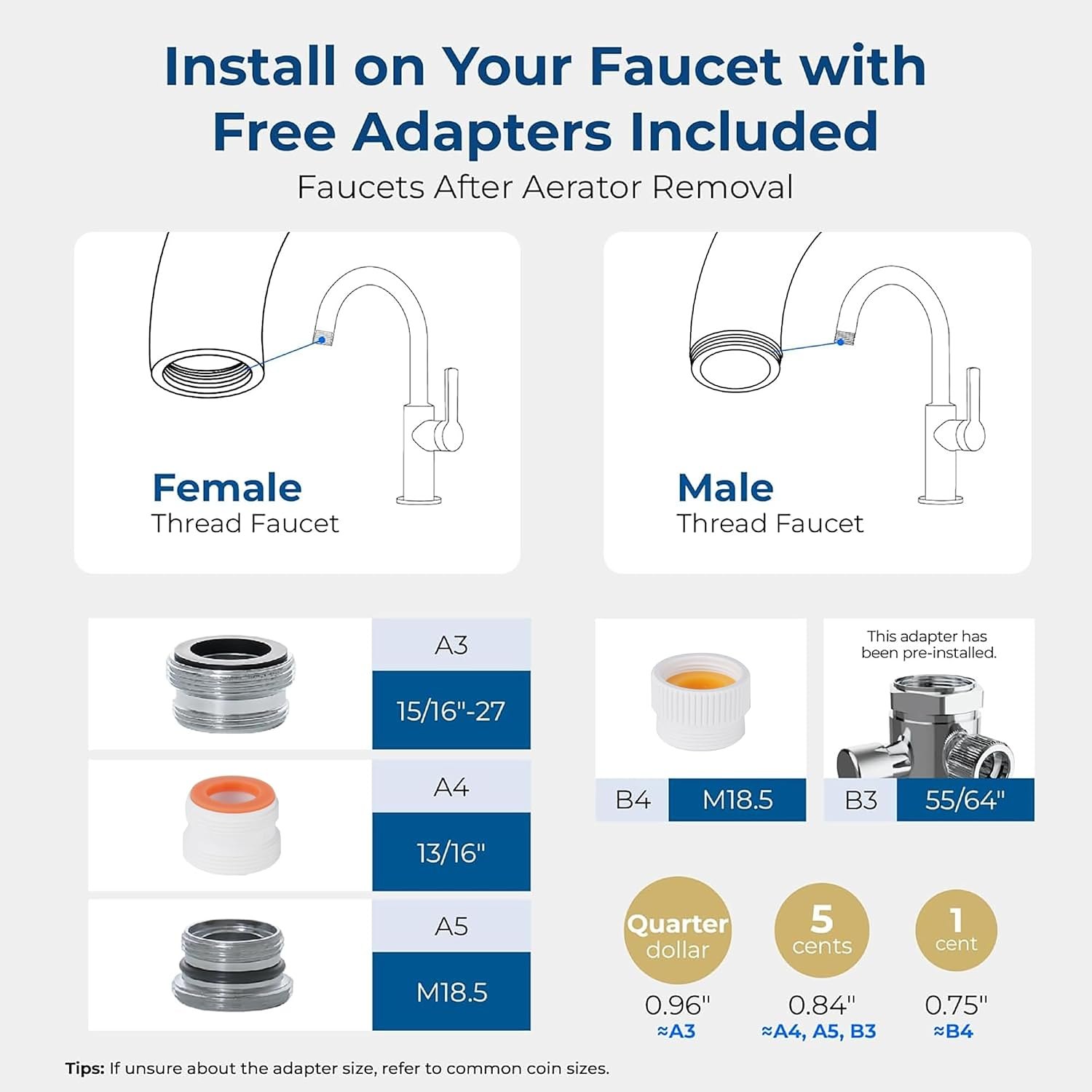
Start with your tap. Tap-mounted filters attach to the spout end, and not every tap takes one. Pull-out sprayer heads, square or very wide spouts and some designer taps simply do not have the right shape. Have a look at your spout before you order.
Then check your clearance. Measure from the bottom of your spout to the base of the sink. The unit stands 13.18 cm tall in its longest dimension, so a shallow sink combined with a low spout can make filling a tall jug awkward. This is the single most common surprise with the best kitchen tap water filter purchases, and a tape measure prevents it.
Finally, think about your water pressure. If your home sits at the low end of normal, you will get a thinner stream through a filter than through an open tap. That is physics, not a fault. Anything inside 100 to 689 kPa is within the stated range.
Living with it day to day
Use the diverter properly. Filtered flow for drinking, cooking, tea, coffee and pet bowls. Unfiltered flow for dishes, rinsing and anything that does not end up in a glass. That habit alone roughly doubles the useful life of a cartridge for most households.
Wipe the stainless housing down with a soft damp cloth when you wipe the sink. Avoid abrasive pads and bleach, which can leave marks on the finish. Hard water will leave spots if you let it dry on the metal, so a quick dry with a tea towel keeps it looking sharp.
Set a reminder for the cartridge. Three months is the stated life cycle and 320 gallons the stated capacity, whichever comes first for your household. Taste is a poor indicator, because performance drops before most people notice a difference. Keeping a spare cartridge in the cupboard means you never put the change-over off.
When you do swap it, flush the new cartridge with running water before you drink from it. This clears loose carbon dust and takes a minute. If the house has been empty for a week or more, run the unit for a minute or two before you fill a glass again.
The short version
A faucet water filter is the least disruptive way to improve the taste of mains water at the kitchen sink. This one gives you a food-grade 304 stainless steel housing with no joints in the body, a 360 degree rotating spout, a flow rate of about 1.9 litres a minute and a cartridge rated at 320 gallons or about three months.
Fit it without tools, use the diverter sensibly, wipe it when you wipe the sink and change the cartridge on schedule. Measure your tap first, and know that it is not aimed at TDS and is not a softener. Within those limits, it is a quiet, practical fix for a glass of water that could taste better.