


The complete guide
Choosing an Inline Refrigerator Water Filter, A Practical Buyer's Guide
The problem most people never think about
You buy a fridge with a water dispenser and an ice maker, and for the first week it feels like a treat. Then you notice the water tastes exactly like the tap. That is because it is the tap. The line behind the fridge is a plain 1/4 inch tube carrying municipal water from the shut-off valve straight to the dispenser, and nothing happens to it along the way.
If your local supply carries a noticeable chlorine note, you taste it in every glass. You taste it in the ice too, which is worse, because ice slowly picks up whatever flavour is hanging around and then releases it into your drink. People put up with it, or they buy bottled water, or they fill a jug filter and keep refilling it. None of those fix the line.
An inline refrigerator water filter does. It goes on the tubing, in the gap behind the fridge nobody looks at, and treats the water on its way through.
How an inline filter works
The design is simple on purpose. Water enters one end of a sealed housing under normal mains pressure, passes through filter media, and leaves the other end on its way to the appliance. There are no moving parts, no power, and nothing to set.
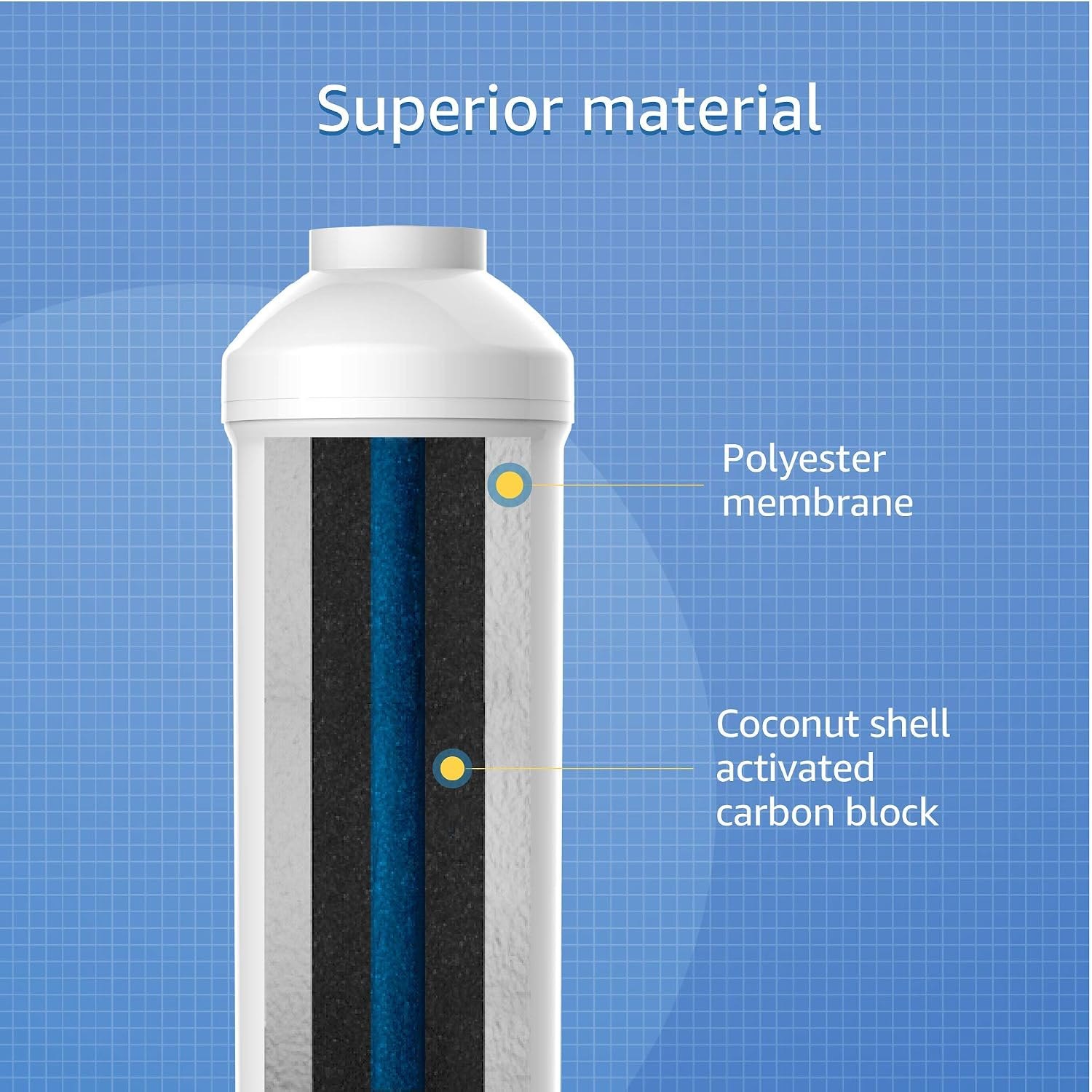
Inside this one there are two things working together. The main element is a 0.5 micron coconut shell activated carbon block. Activated carbon has an enormous internal surface area, and as water moves slowly through it, certain compounds stick to that surface instead of carrying on through. Chlorine taste and odour is the thing carbon is best known for handling, and it is what you notice most in a glass of fridge water.
Wrapped around that block is a polyester membrane with a fine pore diameter. Its job is mechanical rather than chemical. It catches the gritty stuff, sediment, rust flakes off old pipework, suspended solids and colloids, before they reach the carbon or the appliance. That matters more than people expect, because sediment is what clogs ice maker valves and leaves a fine silt at the bottom of a jug.
The two together are a long-proven pairing. The membrane protects the carbon, the carbon handles taste, and the water that comes out the far side is the same water with less of what you did not want in it.
Worth stating plainly: this is designed to reduce chlorine taste and odour and sediment. It is a taste and clarity filter, not a treatment system, and it is meant for drinkable mains (town) water.
Inside the fridge versus on the line
There are two places a fridge filter can sit, and they are not the same thing.
An internal cartridge lives inside the appliance, in the door, the ceiling or the base, depending on the model. It is designed around that one fridge, and it typically needs replacing every six months.
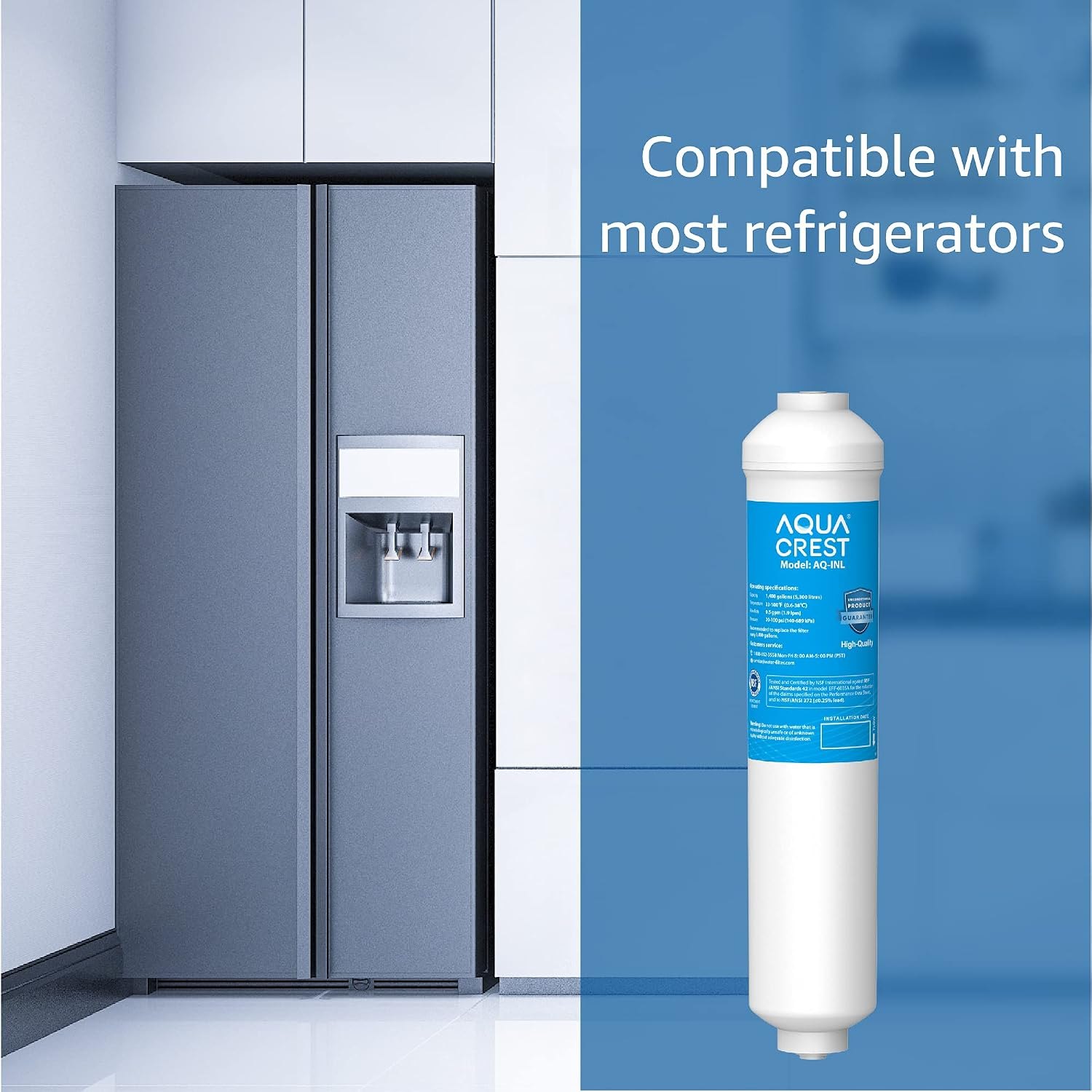
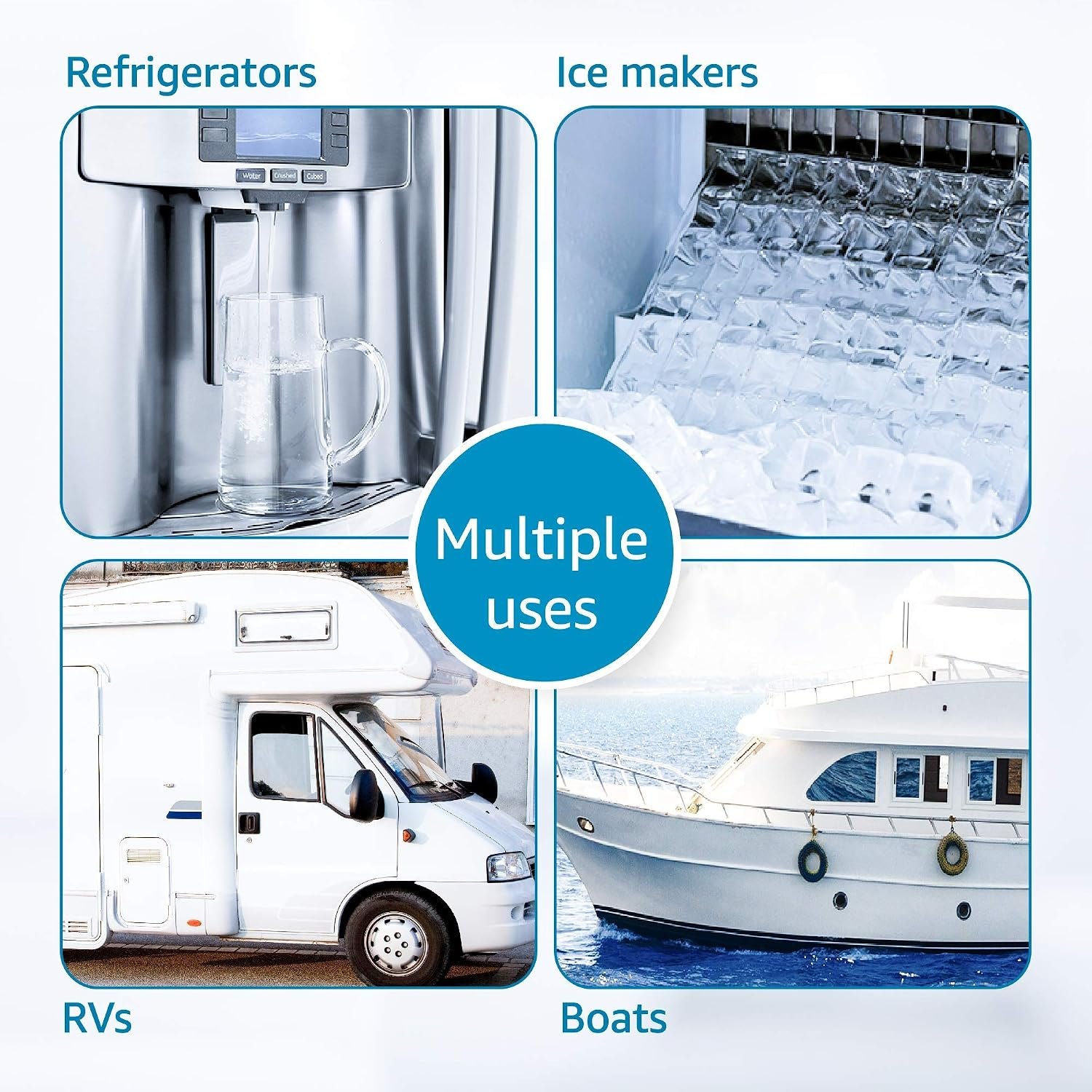
An external inline filter, which is what this is, sits on the water line behind the fridge. It is independent of the appliance. That means it works the same way on a fridge, an ice maker, a plumbed coffee machine, a water cooler, a drinking fountain, or a 1/4 inch line in a caravan or boat. It also means it does not replace a cartridge that sits inside the fridge. If your fridge requires an internal cartridge to be present for the dispenser to run, this sits upstream of that, not in place of it. Some fridges allow a bypass plug instead of an internal cartridge, and your appliance manual will tell you whether yours is one of them.
The practical advantage of the external approach is flexibility and service life. You are not tied to a cartridge shape, and you are not swapping something out twice a year.
The service life question
This filter is rated at five years or about 18,900 litres, whichever comes first.
Those two numbers are both real limits, and they protect against different situations. The litre figure matters in a busy household with four people, a hard-working ice maker and glasses being filled all day. You will hit that volume long before the fifth year. The five year figure matters for a holiday home or a caravan that only gets used a few weeks a year. Carbon does not stay fresh forever just because it is unused, so there is a time limit as well as a volume one.
Your actual mileage depends on your water. Supplies with high sediment load work the membrane harder. Supplies with a heavy chlorine dose work the carbon harder. The honest answer is that the rating is a guide, not a promise, and the signals in your own kitchen tell you more. If the flow at the dispenser drops off noticeably, or the taste starts creeping back towards tap, the cartridge has done its stretch.
Do yourself a favour on install day. Write the date on the housing in permanent marker. Five years is long enough that nobody remembers.
Fitting it without calling anyone
This is the part that stops people buying, and it is genuinely the easy bit.
Start by turning off the water supply to the fridge at the shut-off valve, which is usually behind the appliance or under the nearby sink. Then pull the fridge out far enough to reach the line comfortably. Put a towel and a small container under the connection, because there will be a little water in the tube.
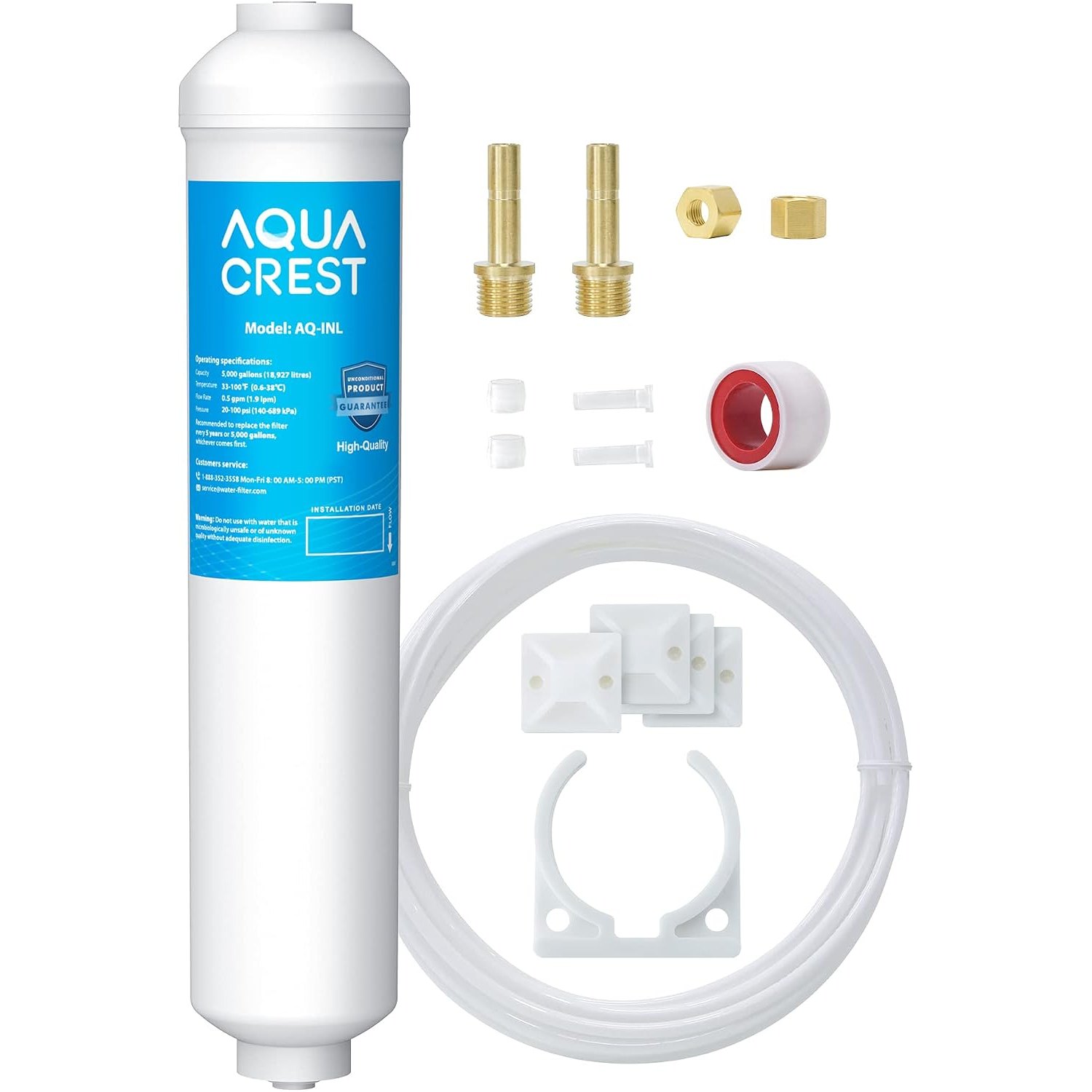
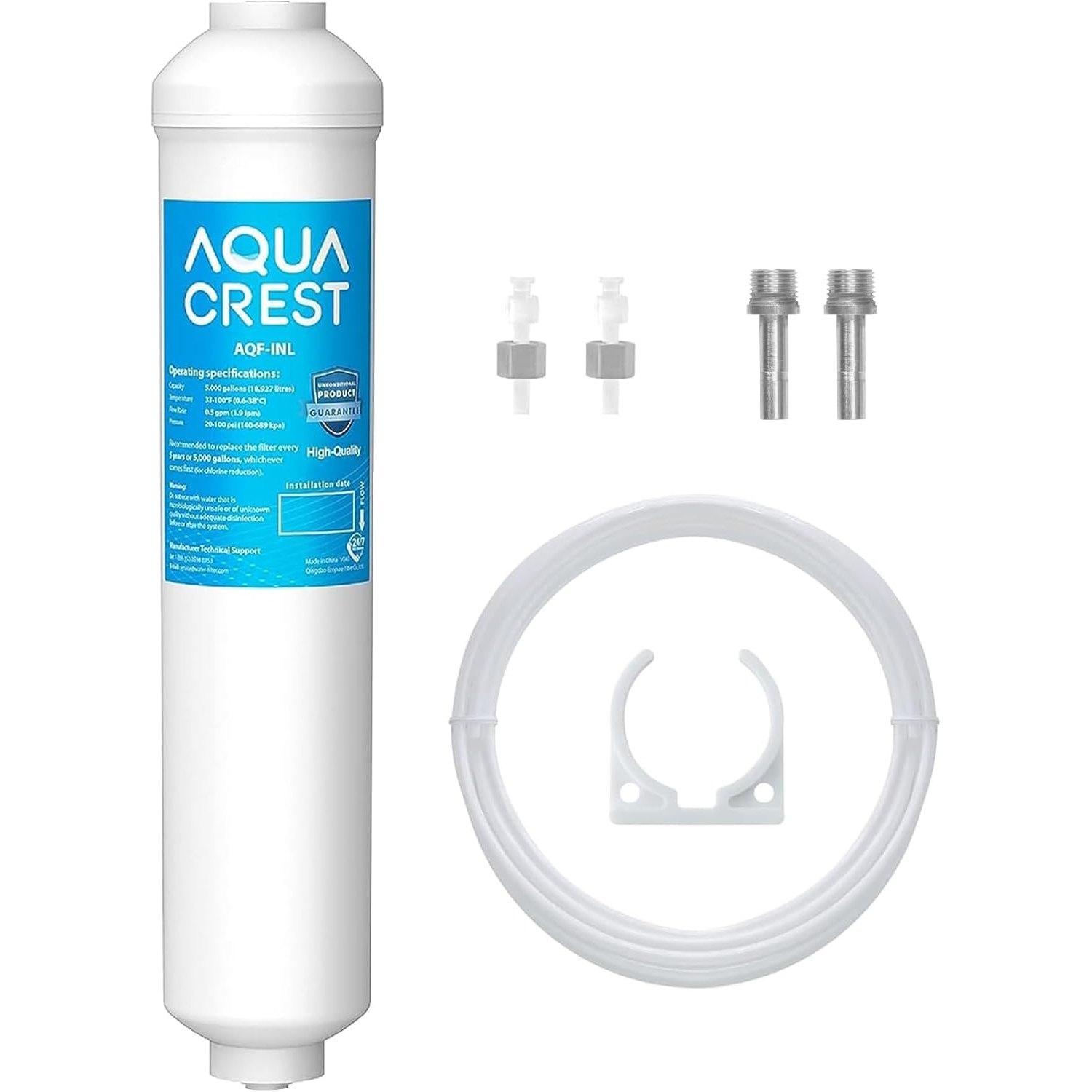
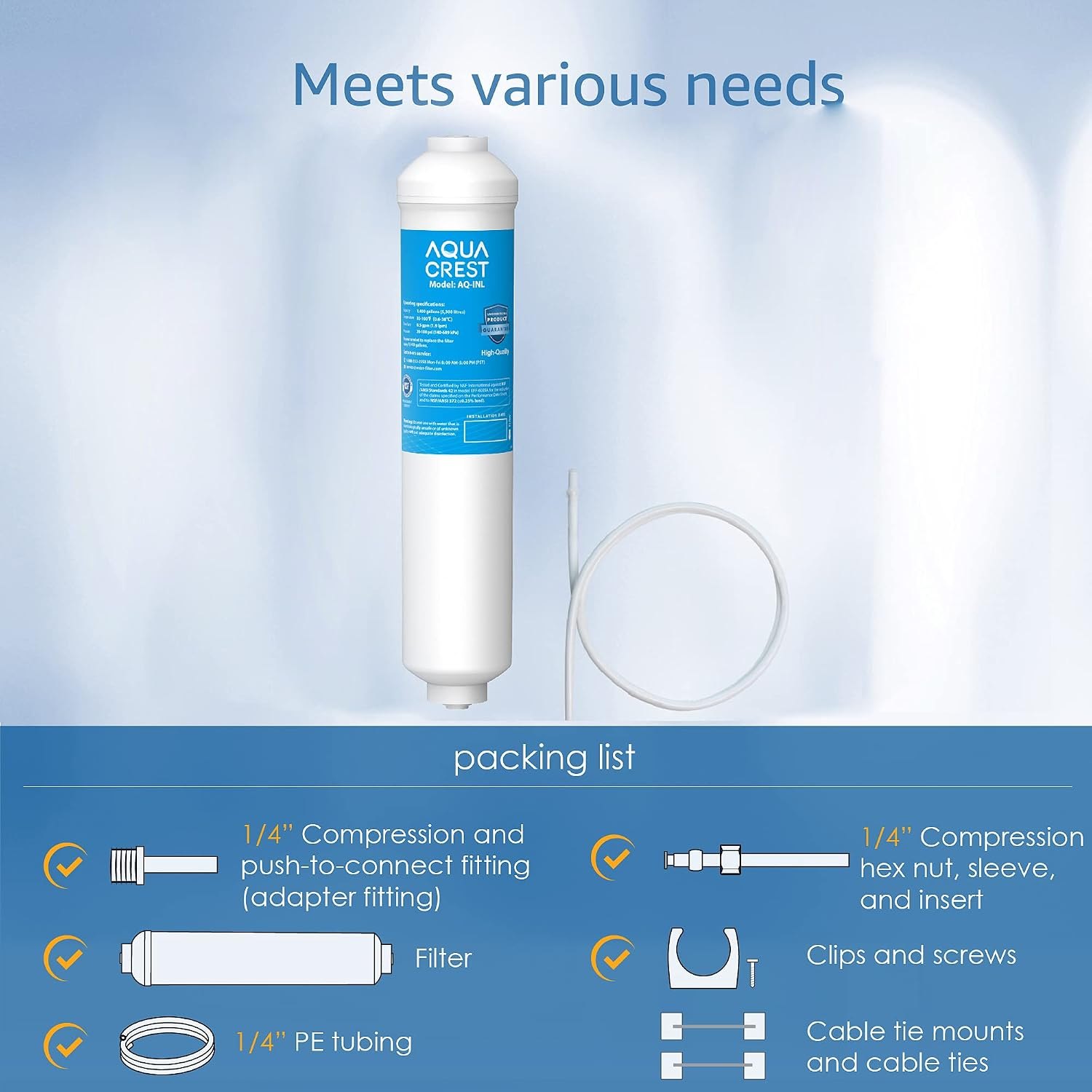
The kit includes both 1/4 inch compression fittings and 1/4 inch push-to-connect fittings, plus PE tubing, a compression hex nut, a sleeve and an insert. The push-to-connect option is the one most people use, because it needs no cutting and no tools. You disconnect the existing line, push it into one side of the filter, and run the supplied tubing from the other side to the fridge inlet. Push firmly until it seats, then give it a gentle tug to confirm it is locked.
Check the flow direction arrow on the housing before you commit. Water should enter from the valve side and exit towards the fridge.
Turn the supply back on slowly rather than all at once, and watch the fittings for a minute. Then run the dispenser for a few minutes until the water comes through clear. New carbon sheds a little fine dust at first, and that flush clears it along with any trapped air. If the first few glasses look cloudy, that is almost always air, not a fault. Keep running it.
Finally, support the filter rather than letting it hang on the tubing. Lay it flat behind the fridge or clip it to a cabinet side. The body is about 27.4 cm long and weighs 408 g, so give it a resting place.
Who this suits
Households on mains water who simply do not like the taste coming out of their fridge. That is the main group, and it is a reasonable reason to buy something.
Ice maker owners get a second benefit, since the ice is only as good as the water it came from. Anyone with a plumbed-in coffee machine on a 1/4 inch line is a candidate too, because the chlorine note is unflattering to coffee.
Caravan, camper and boat owners use these on their 1/4 inch runs where the hookup is drinkable mains water. So do people with a drinking fountain or a water cooler plumbed into the wall.
Who it does not suit: anyone on a private well, rainwater tank or any supply that is not drinkable mains water, and anyone hoping for a softener. Hardness is a separate problem with separate equipment.
Keeping it working
There is very little to do. Keep the outside of the housing dry and check the fittings for drips in the first day or two, since that is when a partly seated connection shows itself. After that, forget about it.
If the filter sits unused for more than a week, say after a holiday, run the dispenser for a minute before you drink. That clears the water that has been standing in the line.
Replace the cartridge on the maker's schedule, or earlier if flow slows or the taste changes. Replacement is the same job as the install, just quicker the second time because you already know where everything is.
The short version
An inline refrigerator water filter is a small, cheap-to-run fix for a specific annoyance. It fits the 1/4 inch line behind your fridge, uses a 0.5 micron coconut shell carbon block and a polyester membrane to reduce chlorine taste and odour plus sediment, and runs for five years or about 18,900 litres. It needs no power, no plumber and usually no cutting, since both compression and push-to-connect fittings are in the box.
Measure your line before you order, confirm it is 1/4 inch, mark the date on the housing when you fit it, and then enjoy not thinking about it again for a long time.